Free Shipping on orders of $99+ click for details

Ask the experts: 260.587.9501 | Customer Service

Call Us: 260.587.9501 | Customer Service

Your cart is currently empty.
Free Shipping on orders $59+ click for details
Welcome to the 3Rivers Archer's Den

Archer's Den

Welcome to the Archer's Den. Here you will find a gathering of traditional archery stories, tips and techniques, trophy animals taken with traditional bows, and plenty more. Stay a while and learn something. We hope you enjoy and even submit a trophy of your own, or leave a comment on a post.

All posts by 3Rivers Archery

Your longbow and recurve experts. Serving the archery community as the World's largest supplier of traditional and primitive archery supplies.

Product Demos: How-To Videos from 3Rivers Archery 9

3Rivers Archery Product Demos/How-To Videos


Assembling the Tomahawk Take-Down Longbow

Dale Karch of 3Rivers Archery demonstrates how to assemble and disassemble a Tomahawk Take-Down Longbow. .


Sharpening the Woodsman Broadhead

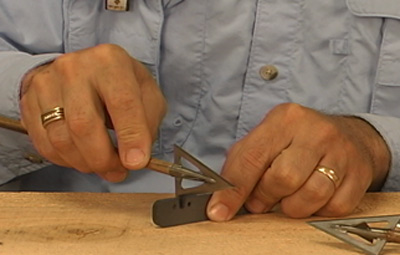
Dale Karch of 3Rivers Archery demonstrates how to sharpen the deadly Woodsman Broadhead using the Stubby JewelStik Diamond Hone, Broadhead File, Flat Stone or Flat Diamond Sharpener, and 3Rivers Broadhead Holder.


Installing Calf Hair Plate & Rest

Dale Karch of 3Rivers Archery shows you how to install a Calf Hair Plate and Rest on your bow.


How to Install a Nock Point

Dale Karch of 3Rivers Archery shows you how to install a string nock using an Aluminum Bow Square, and Nock Pliers.


Installing Leather Bow Grip

Dale Karch of 3Rivers Archery demonstrates how to install a leather bow grip using a Leather Punch, Barge Cement, Sinew, and Curved Leather Needles.


Installing Brush Buttons

Dale Karch of 3Rivers Archery shows you how to install Brush Buttons on your Bow String using Tex-Tite String Wax.


Using the Big Dipper Dip Tube

Dale Karch of 3Rivers Archery demonstrates how to use the Big Dipper Dip Tube, Gasket Lacquer, and Speed Coat Arrow Dipping System.


Installing Axis Inserts

Dale Karch of 3Rivers Archery demonstrates how to install Axis Inserts.


Setting Up a Bow

Dale Karch of 3Rivers Archery demonstrates how to set up a bow. Includes measuring the bow, stringing the bow, installing rug rest & plate, and installing the nock point.


Determining Your Dominant Eye

Dale Karch of 3Rivers Archery demonstrates how to determine whether you are right or left eye dominant.


Installing Fur Tracers

Dale Karch of 3Rivers Archery shows you how to install fur tracers on your arrows.


Using a Back Quiver

Dale Karch of 3Rivers Archery demonstrates how to use a back quiver.


Woodchuck Power Taper Tool

Dale Karch of 3Rivers Archery demonstrates how to use the Woodchuck Power Taper Tool.

All You Wanted to Know About Primitive Archery

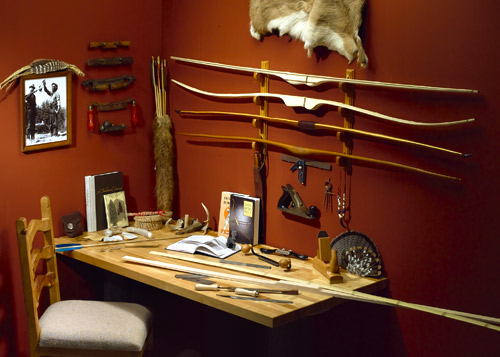
Primitive Archer's Work Desk
Primitive Archery really takes Archery back to the basics by adding Stone to the Traditional “Stick & String” equation.


The needs of the primitive archer are simple. They work with simple hand tools making primitive bows, primitive arrows, stone arrowheads, and the like.

When it comes to bows, there’s a gray line between primitive and traditional. Most folks agree that if a bow has no fiberglass, it’s a primitive bow. “Primitive,” in this case, has nothing to do with performance. It’s a category. We clarify this because we have seen some all-wood bows that could nearly outperform some fiberglass-backed bows. The bamboo backed Osage bows made today can be incredible performers, and let’s not forget the Hun-style horse bows, those marvels of engineering that were casting arrows over 900 yards hundreds of years ago.
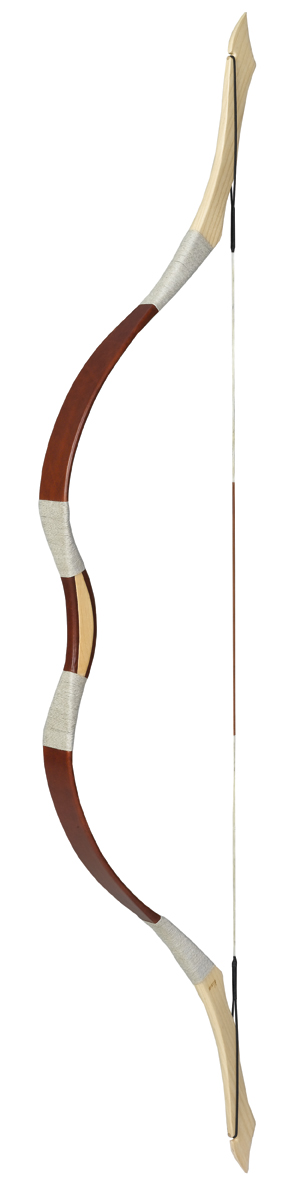
Magyar Sport Horse Bow
Although they’re often called “Primitive,” many bows designed centuries ago, perform as well or better than modern bows.

For the bulk of the folks interested in primitive archery, it’s an answer to an internal call. Something deep inside that says, “This is the way my ancestors lived and I want to immerse myself in it.” Let’s face it, the more effort you put into something, the higher the return of personal satisfaction as well as pride for a job well done. That’s why so many people switch from compounds to recurves and longbows in the first place. They want more challenge and satisfaction. Not only is mastering the primitive arts challenging, it is very rewarding in many respects. And don’t forget the self-confidence that comes from knowing how to survive with basic tools and knowledge. It’s easy to see why so many of us pursue primitive archery and other primitive living skills. It’s natural, where we came from. It’s in our genes.

Leading the list in ‘must-have’ items for those interested in primitive archery and living skills are primitive focus books and primitive focus DVDs. There is much to be learned, so it’s only natural to turn to any and all available information resources. The main “Primitive’ categories of interest are: Self-bow building, bow string making, flint knapping, and primitive living & survival skills. Let’s briefly discuss each category. As we do, we’ll mention the best selling items in each category.

Self Bow Building

This is a huge topic. Several columns could be written about self bows alone. The term self bow is generally accepted to include any bow built from one solid piece of wood. However, since these bows can be backed with various materials such as sinew, rawhide, and snakeskin, we lump them all into the self-bow category. Many bowyers also laminate different woods and non-fiberglass materials together in the construction of high-performance ‘primitive’ bows. These bows are far from primitive, yet since they have no fiberglass, they are included in this ‘primitive’ category.

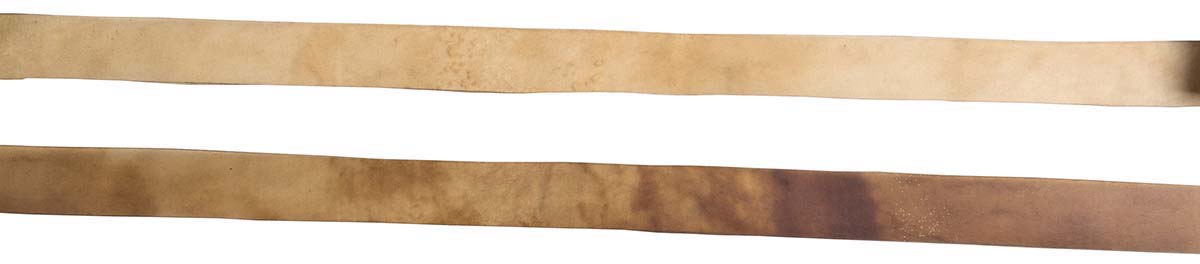
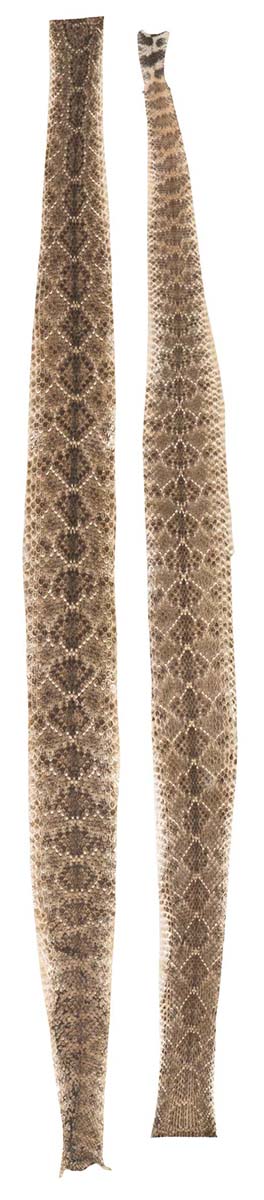
Natural Leg SinewRawhide BackingsDried Rattlesnake Skins
Sinew, Rawhide, and Snakeskin are popular backings for self bows.

The Bowyer’s Bible series contains Volumes 1-4 and they are exactly what you’d expect… “THE books for aspiring bowyers.” Published by Jim Hamm, these books were a combined effort by many talented bowyers from all over the world who shared their insights and techniques for bow building.
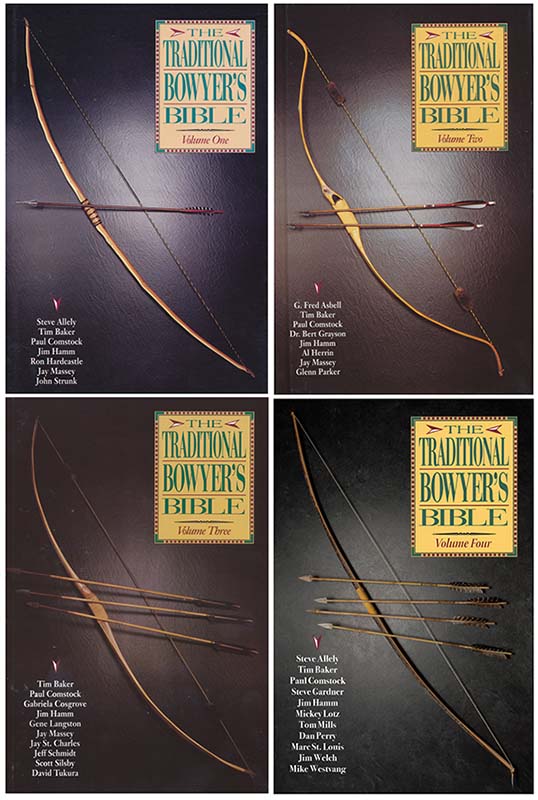
Traditional Bowyer's Bible Complete Set
Every Bowyer’s library should include The Bowyer’s Bible series.

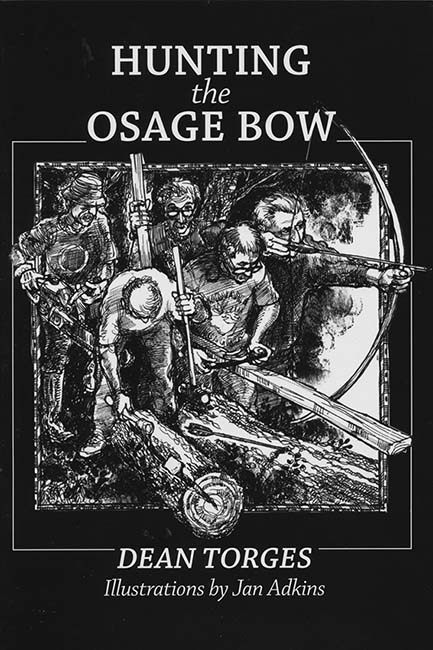
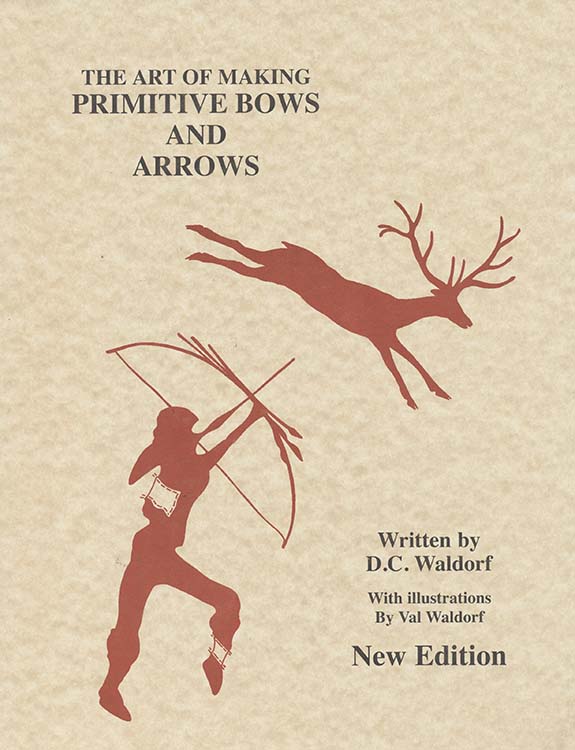
Other excellent bow building books deserving of mention are: Hunting the Osage Bow by Dean Torges, and The Art of Making Primitive Bows and Arrows by D.C. Waldorf. Both of these books are worth including in your library. But if you intend to start small, at a minimum, purchase the Bowyer’s Bible series.

Hunting the Osage Bow Book
The Art of Making Primitive Bows and Arrows Book

The aspiring bowyer has a lot of choices when it comes to reference books.

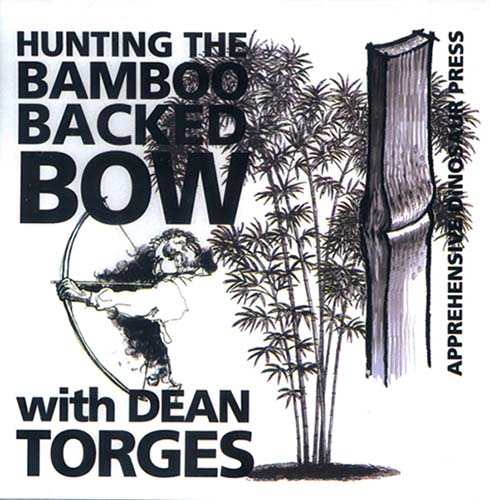
In bow building DVDs, several titles stand out. These include Rattlestick: A Selfbow Tutorial by Gary S. Davis, Billets to Bow by Glenn St Charles, and Hunting the Bamboo Backed Bow with Dean Torges. Each does a superb job in making the process easy to understand and accomplish.
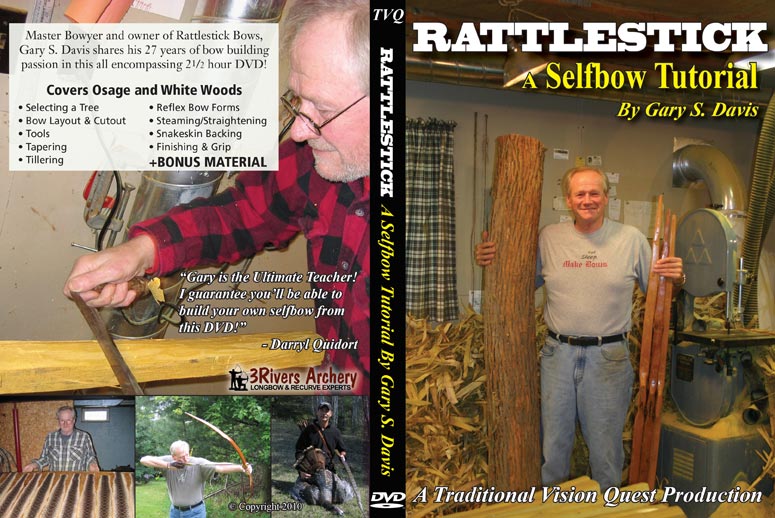
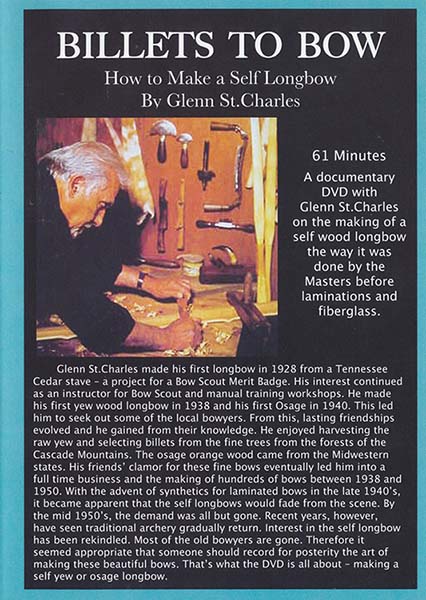
Rattlestick: A Selfbow Tutorial DVDBillets to Bow DVDHunting the Bamboo-Backed Bow DVD

Supplies for Bow building

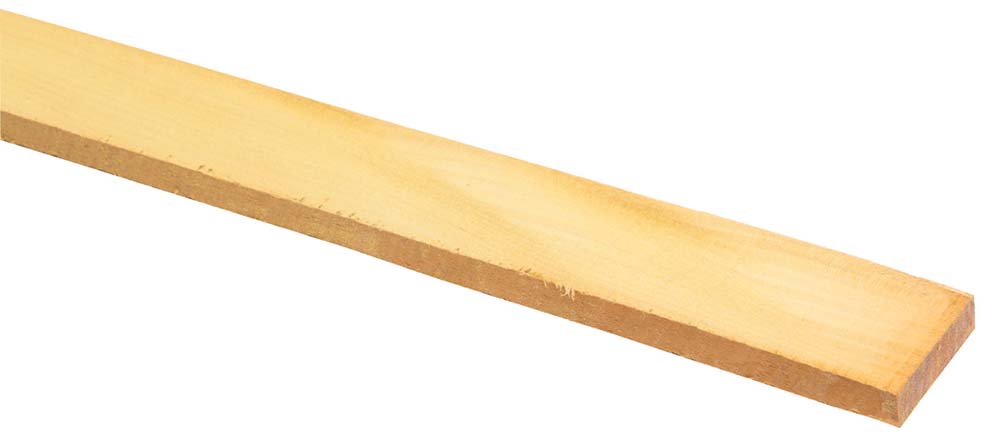
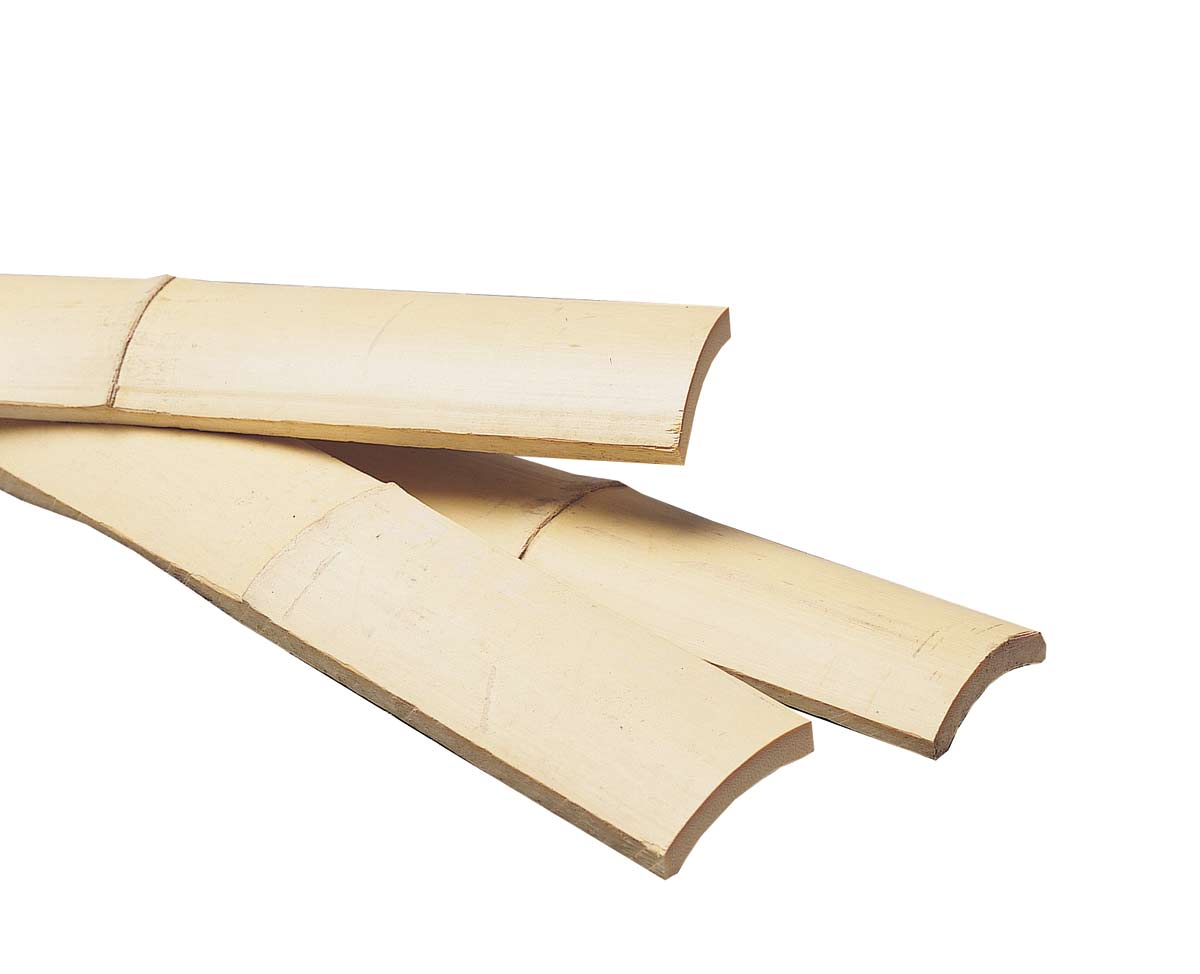
When it comes to bow staves, (quarter-splits from logs used to make self bows) quality staves are difficult to come by. But you can probably find someone locally who carries them. Also keep in mind the popularity and usefulness of Osage lumber and Bamboo backings. The Osage lumber is pre-cut to bow sized dimensions, roughly 1½” x 5/8″ x 72″. Bamboo backing is then prepared and glued onto the back of the Osage. Both the Osage and the Bamboo are quite popular in do-it-yourself circles.

Osage Bow Building Lumber 5/8" x (68"-72")
Bamboo Bow Backing Strips

Popular Primitive bow building materials include Osage and Bamboo.

You’ll also want to make sure you have the adhesives on hand for these bow building techniques. The EA-40 two-part epoxy by Smooth-On is an excellent choice because it can be used in fiberglass-to-wood or wood-to-wood applications as well.
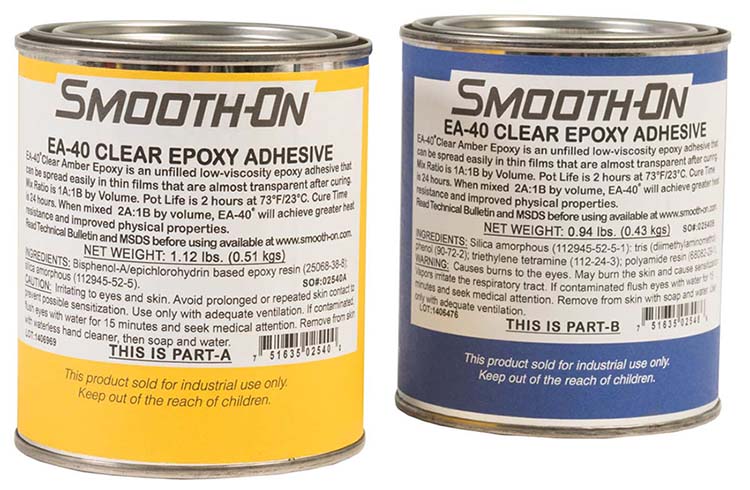
Smooth-On EA-40 Bow Glue
EA-40 two-part epoxy is a versatile and effective bow building adhesive.

Many tools are used in bow building, so it’s a good idea to make yourself familiar with them. The list of important bow building tools includes; draw knives, spoke shaves, scrapers, and rasps. Most of the heavy work and rough shaping is done with draw knives. Spoke-shaves are used when a little more control and finesse is needed. Cabinet scrapers see a lot of use for final shaping and very fine detail work. Rasps and files, depending on their coarseness, are used often and during different stages of the construction process.

Forged 6″ Draw Knife Spoke Shave 3-Piece Scraper Set
The successful primitive bowyer needs to be familiar with many tools.

Once the bow is shaped, tested and ready to go, it needs a protective bow finish. None of the finishes are completely waterproof, but every little bit helps. If moisture gets into the limbs of an all-wood bow, performance will be dramatically reduced. Our favorite finishes are Tru-Oil, (a highly refined, boiled linseed oil) or a quality spray polyurethane finish like those available from Min-Wax.
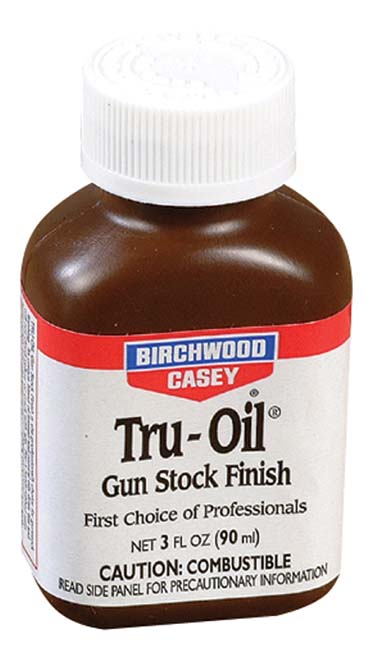
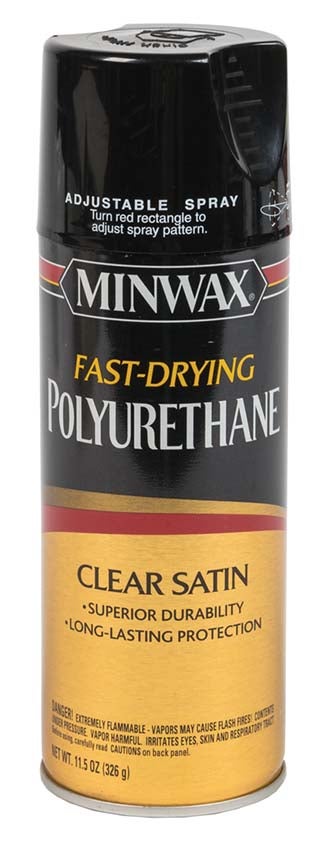
Tru-Oil Satin Bow FinishMinwax spray polyurethane bow finish
A good finish is important to protect wooden bows from moisture.

Handmade Bow strings

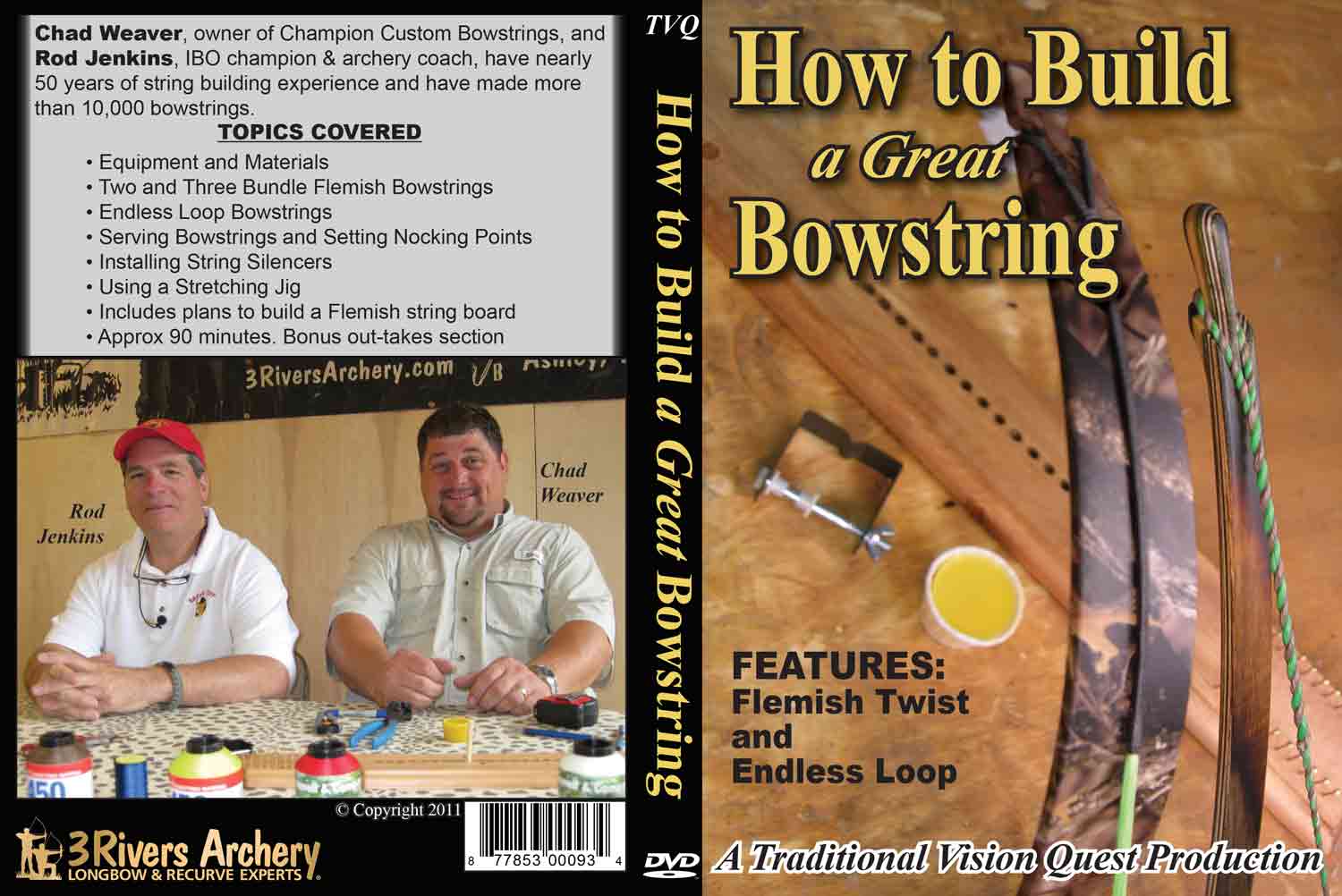
Every bow needs a string. It has always struck us as odd that so many people are willing to build a bow from scratch, but then they balk at making their own bow strings. Most primitive bowyers use the Flemish-twist style of bow strings. Many of them still buy the strings too, but if you have the materials on-hand, as well as the “how-to” information, you can build your own. B55 string material is perfect for primitive bows. You’ll also want to consider having a Flemish string jig, serving tool, and a DVD like How to Build a Great Bowstring. There is also an excellent chapter on bow strings in The Traditional Bowyer’s Bible, Volume Two.
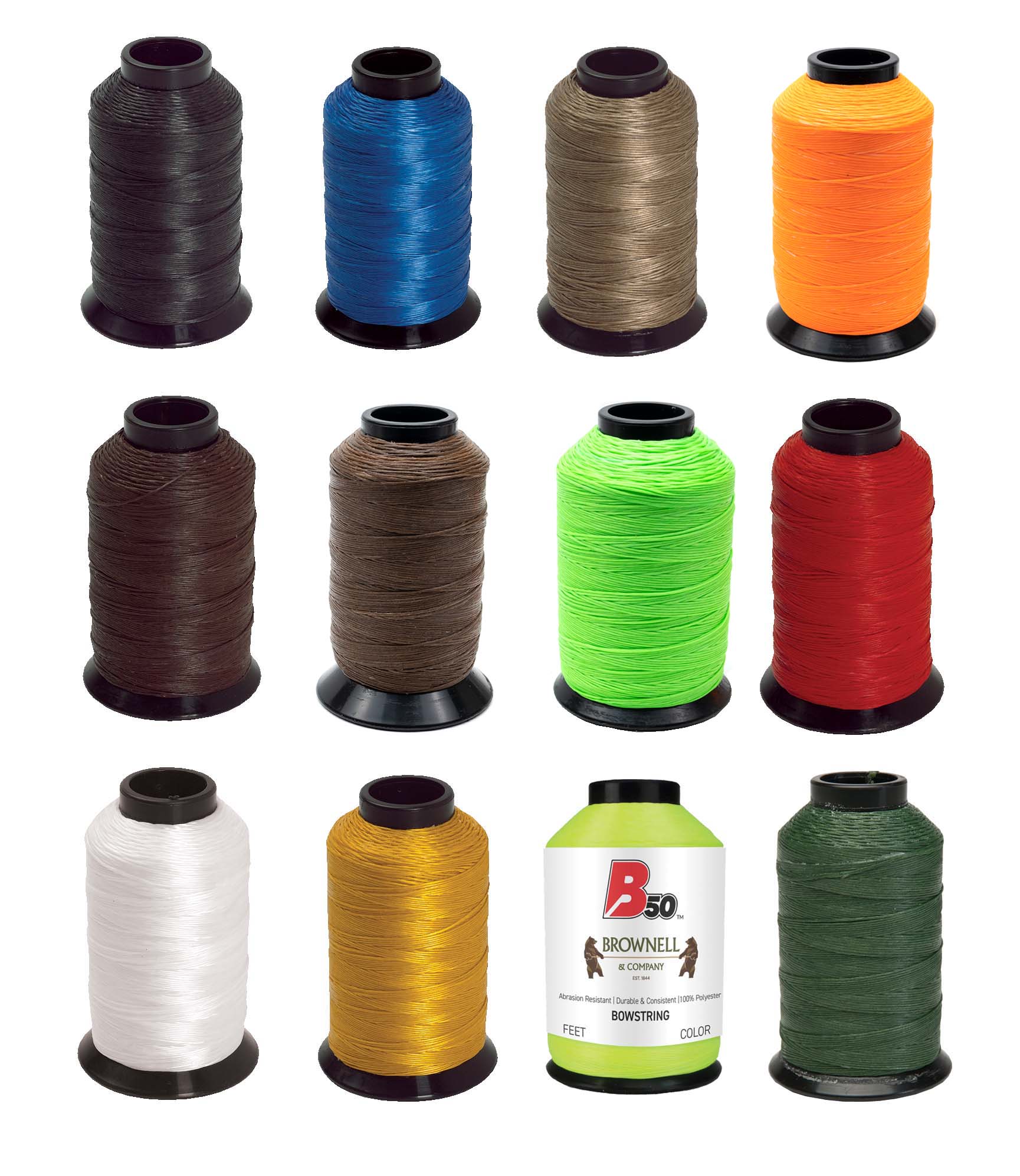
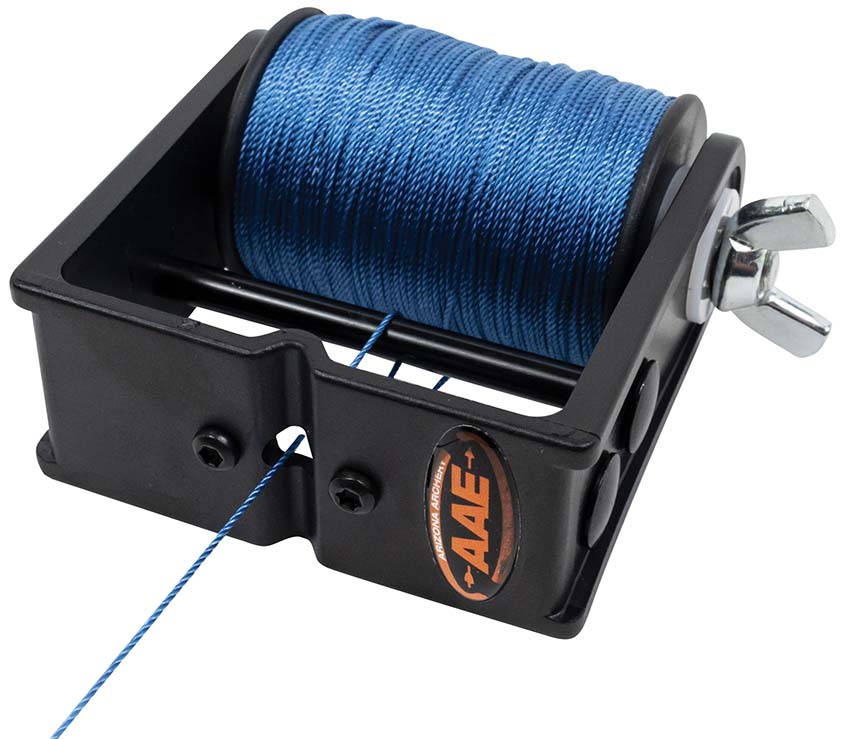
B-50 String MaterialAAE Pro String ServerHow to Build a Great Bowstring DVD
The Primitive Bowyer should also consider having string making tools and accessories on hand.

Flint Knapping

Flint knapping is one of the big draws in primitive archery. This art is experiencing strong growth. It’s understandable. People are fascinated with knapped arrowheads and knives. Live demonstrations always draw big crowds. No one seems to be able to walk by a knapping demo without stopping to check out this “magic.” If you’ve ever watched one, you know what we mean. Many flint knappers do it for the pure pleasure of making something functional and beautiful by strategically removing flakes of material, one at a time, from a plain old rock. We’d venture a guess that most knapped artifacts end up in display cases or used in jewelry, rather than on arrows destined for hunting. Still, there are those who hunt with them, and quite successfully we might add.

If you’d like to try your hand at this ancient art, you’ll need a good source of flint. In some states, like Ohio, flint may be found quite readily in rock quarries and even freshly plowed fields. Watch out for quality if buying from a local source. Ask to see some finished pieces, or even ask for some samples and give them to one of the knappers in your area to get their feedback. If it’s good stuff, buy it. Shipping on flint is a bit high, so delivery to your door is great! Normally though, you’ll need to get it from a distributor. In that case, if shopping for flint, look for the heat-treated flint. When you heat-treat flint properly, you enhance it’s “knap-ability.” In other words, you’ll get a stone that’s easier to flake. Obsidian is another material you may want to consider. It is really volcanic glass, a super-hard, extremely brittle stone that yields beautiful points. It’s a bit more delicate to work with, but is certainly worth the effort.
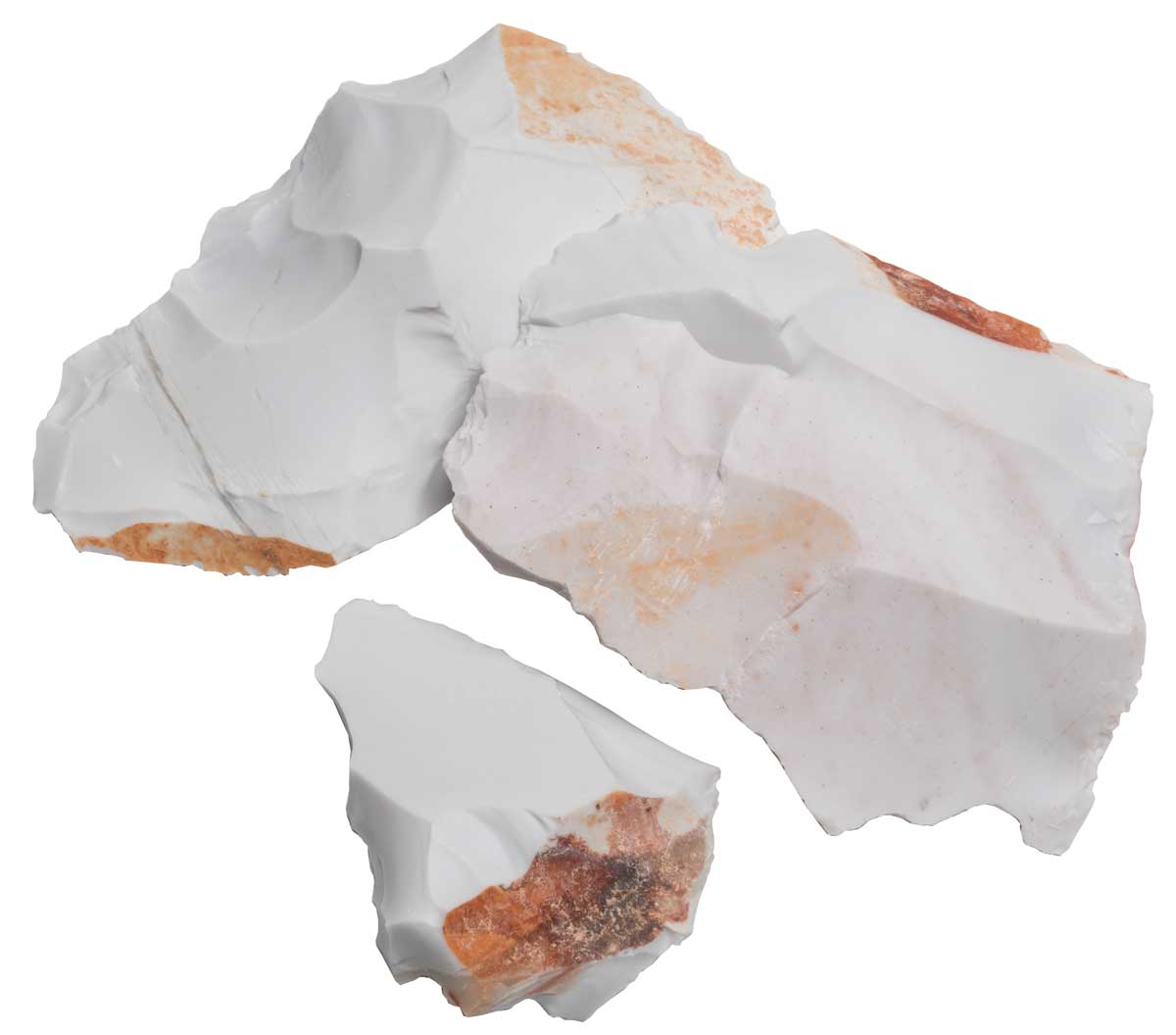
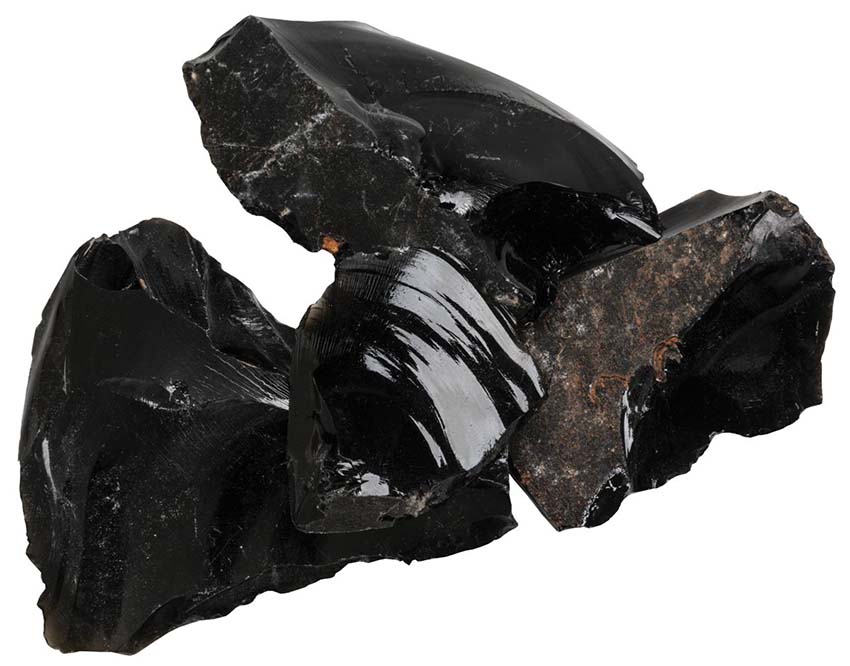
Heat treated FlintObsidian Stone for Flint Knapping
Heat-treated flint and Obsidian are both excellent materials for flint knapping.

Tools for Flint Knapping

There are two types of tools that flint knappers must have, the pressure flaker and the knapping billet. Here’s why. Pressure flaking and percussion flaking are the two main techniques used in Flintknapping. Pressure flaking is accomplished with a special tool utilizing a handle with a small, pointed section of either; copper, aluminum, or steel sticking out the front. The tool is brought in contact with the edge of the piece and is first pressed straight into the piece, then, when the knapper feels the inward pressure has built up sufficiently and it’s time to remove the flake, the pressure is changed to a downward angle until the flake pops off.

Percussion flaking is used more for general shaping unless you are pretty darn good. We know knappers who can almost make an entire piece by percussion and only switch to the pressure flaker for final shaping and sharpening. Percussion is like it sounds. You force the flakes off of the stock by striking the piece with a percussion flaking tool. These are made of moose antler, copper, brass, and even aluminum. The stone is held on your working pad, and you strike the edge of the piece repeatedly, constantly turning the piece as the flakes are removed. This is a fast way to remove a lot of material.

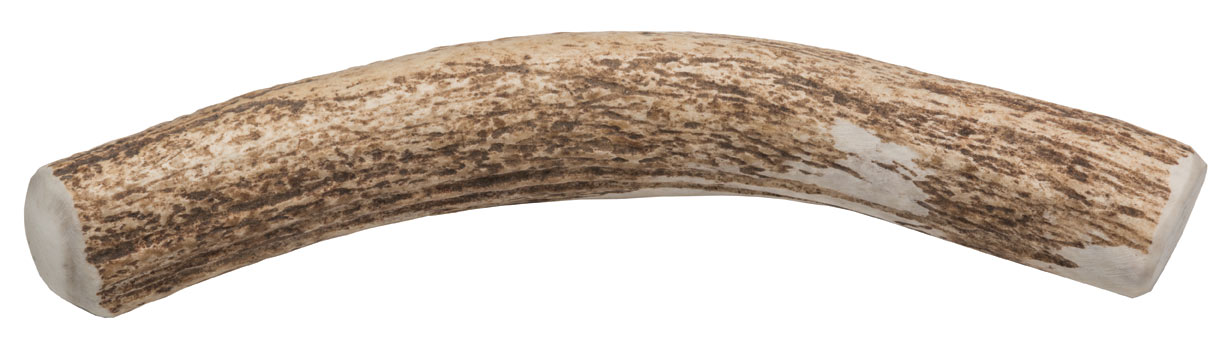
Copper Flaker for Flint KnappingAntler Flint Knapping Billet
Two must-have tools for flint knapping are the pressure flaker and the knapping billet.

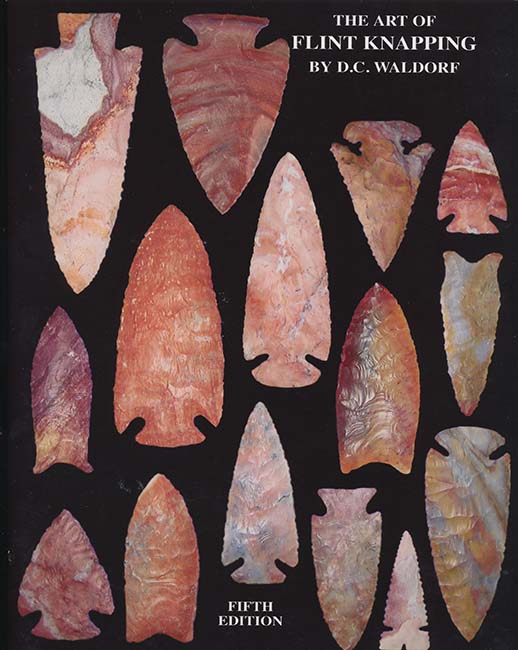
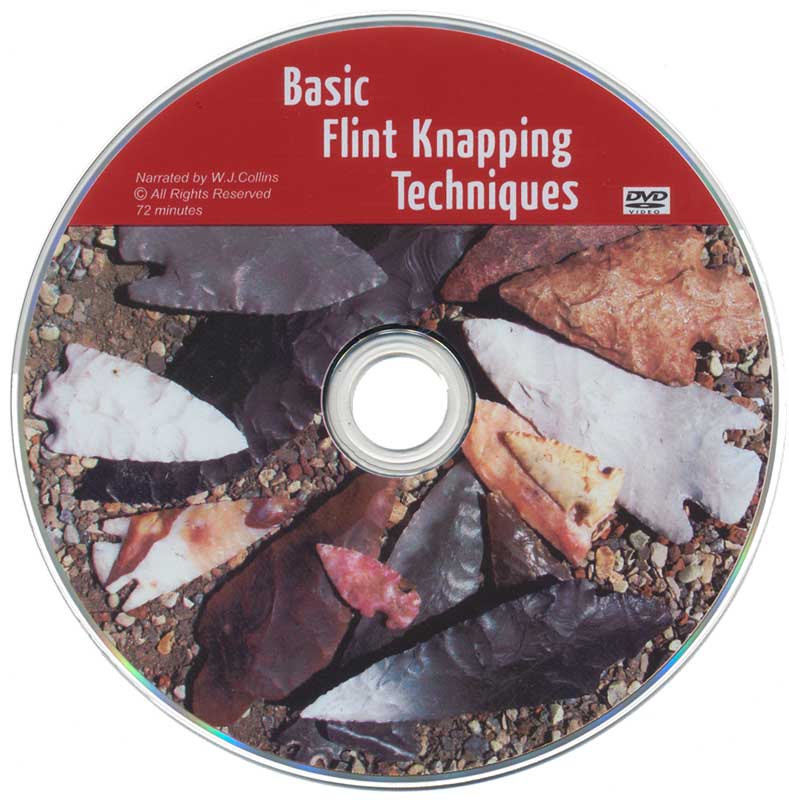
Anyone interested in serious flint knapping must be able to learn percussion flaking. At least one good book and one good DVD are recommended. DC Waldorf’s The Art of Flint Knapping 5th Edition is a good choice for a book (has a companion DVD also). Working Obsidian by D.C. Waldorf and Basic Flintknapping Techniques narrated by W.J. Collins are good DVDs too.

Don’t underestimate the importance of flint knapping reference materials.

One product that sells year-in and year-out is the flint knapper’s kit with Aluminum Billet. This small box is a top-seller and contains everything a budding flint knapper needs to get started. They make great gifts and for the person who just wants to give flint knapping a try, they’re perfect.
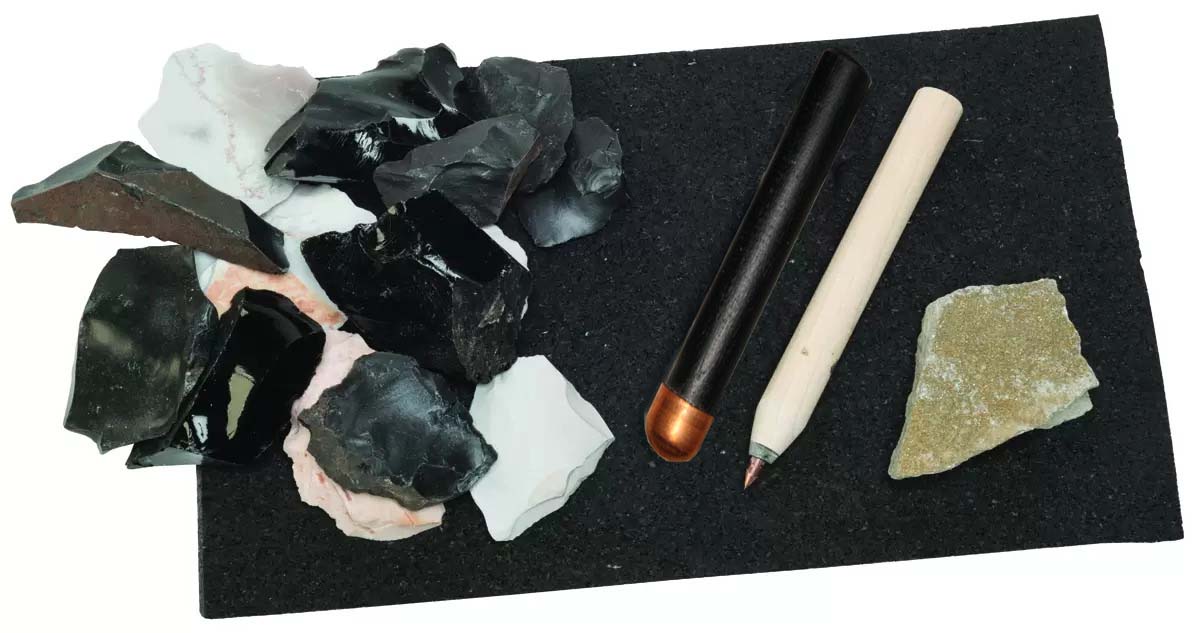
Flint Knapping Kit with Aluminum Billet
Everything you need to start flint knapping is in this top-selling starter kit.

Primitive living and survival skills

Primitive living and survival skills are another popular category in the primitive arena.

“What if my plane went down and I had to survive in the wilderness?”
“What would I do about food and water?”
“Where would I stay?”
“What would I wear?”

These are the kinds of questions that are answered when you study primitive living and survival skills. Once you get a feel for the answers, it’s exciting to get in the woods and test yourself. In time you feel totally comfortable in the wilds because you KNOW that you can take care of yourself. To develop these valuable skills you mostly need just good books and DVDs. One such book, Primitive Wilderness Living and Survival Skills, by John McPherson is excellent. It covers just about everything you’d need to know to survive in the wilderness, including primitive bow and arrow building, trap making and setting, shelters, cordage, and clothing. This particular book covers it all from a primitive angle too.
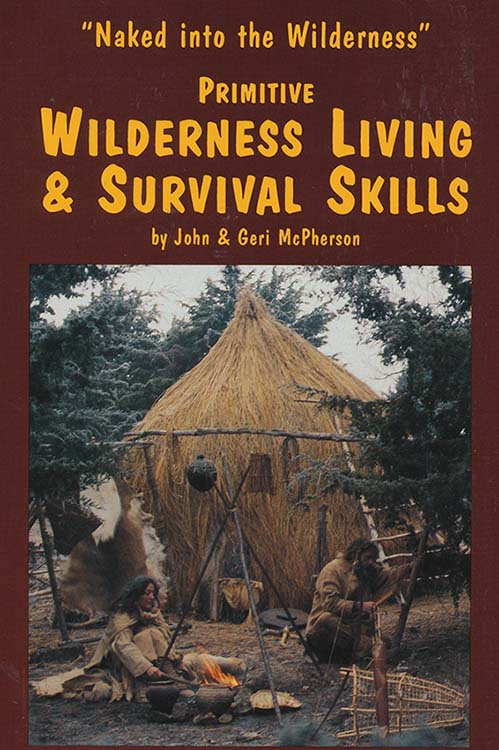
Primitive Wilderness Living & Survival Skills
One of the best primitive living/survival guides is John McPherson’s
“Primitive Wilderness Living and Survival Skills.”

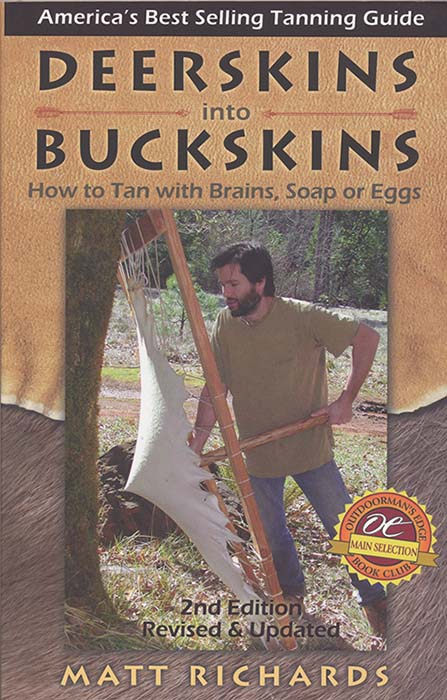
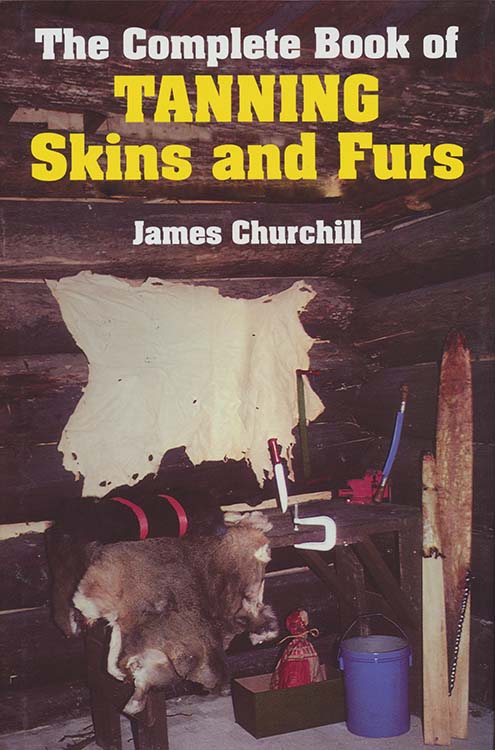
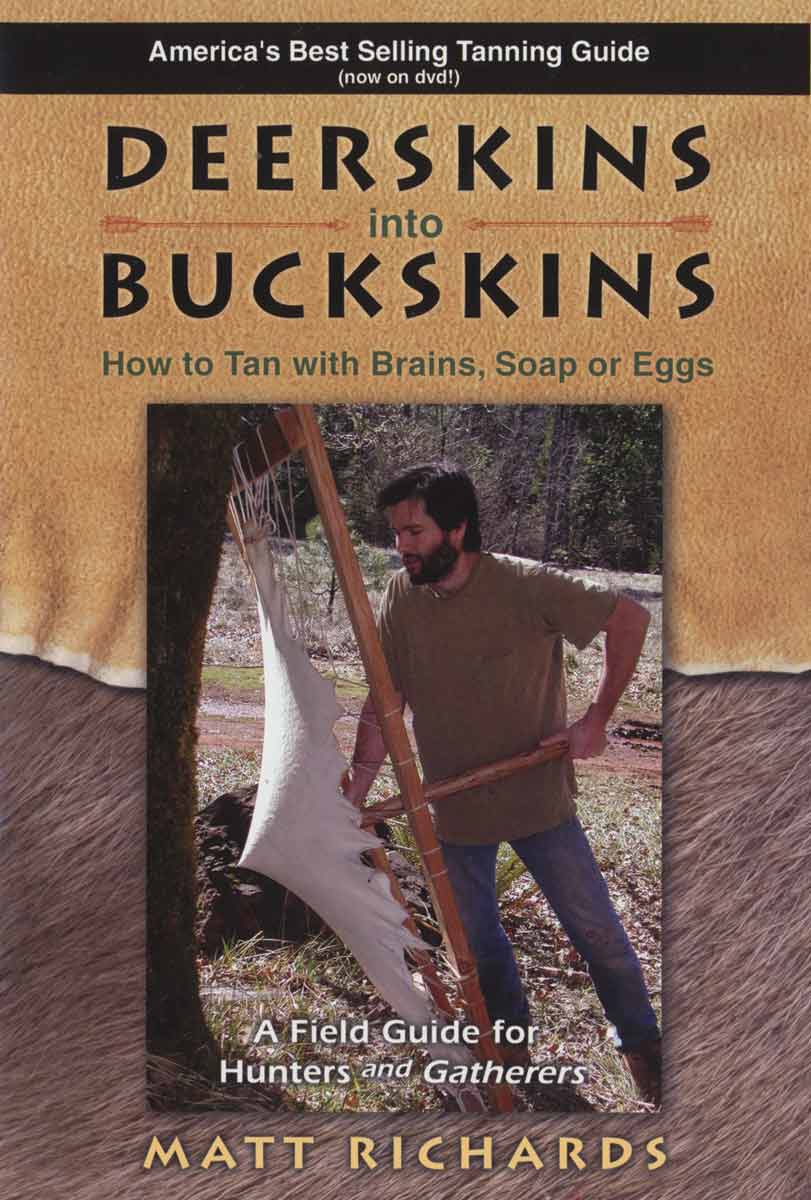
If you’re interested in tanning hides, there is a good selection of books and DVD’s on the topic. The Complete Book of Tanning Skins and Furs is a good one, as is the Deerskins to Buckskins series (it comes in book or DVD and has everything you need to know for tanning skins.) We understand that this seems a bit “fringe” to archery enthusiasts, but we have found that those who are making their own primitive bows and arrows are also open to exploring other primitive skills and hobbies.

There are several excellent resources for those interested in tanning hides.

The world of primitive technology is fascinating. It’s a direct link to our past. And by learning the skills involved we perpetuate the knowledge. Give it a try. Read some of the books and watch the DVDs. By selecting certain key how-to books and DVD’s, you can build your knowledge. And with the proper supplies and tools for bow building and flint knapping on hand, you’ll soon be on your way to exploring a rich and rewarding new hobby!

Keep Hunting
Dale Karch & Todd Smith

For more information contact:

3Rivers Archery
PO Box 517
Ashley IN 46705

1-866-587-9501

[email protected]
or check us out on-line at 3RiversArchery.com

By: Dale Karch and Todd Smith

Choosing a Broadhead for the Shot of a Lifetime

By Dean VanderHorst
Arrow Production Manager

When choosing a broadhead, there is a lot of information out there to wade through that can be confusing and overwhelming. “Do I shoot 2-blade or 3-blade?” “Is 4-blade better than both?” “What really is a fixed blade broadhead?” “How important is grain weight?” “Why would I want a single bevel broadhead?”
How to Choose a Broadhead

So many choices can be disillusioning to the archer trying to find the perfect broadhead. In my opinion, most every broadhead on the market today will be effective on the whitetail deer-sized big game that most of us tend to hunt. Broadheads have attributes that make them unique and different, but what we need to get at is which one will be the best fit for you.

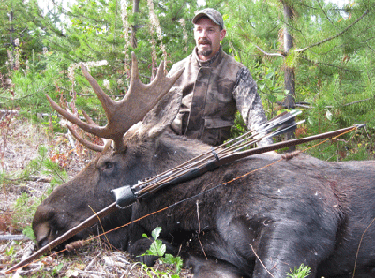
Dean VanderHorst with Canadian Moose
Every archer should have the same goal in mind when selecting a broadhead. That goal should be to produce a quick, humane kill with good blood trails to recover the game. To this end, many archers overlook the essentials, and get lost in the hype of broadhead advertising when selecting a head. There are two basics in broadhead selection that every archer has to attain to be effective in the field: sharpness and arrow flight. If either of these criteria are not met it will result in poor penetration, bad shot placement, and will inevitably end in wounded and lost game, which is not what any bow hunter desires.

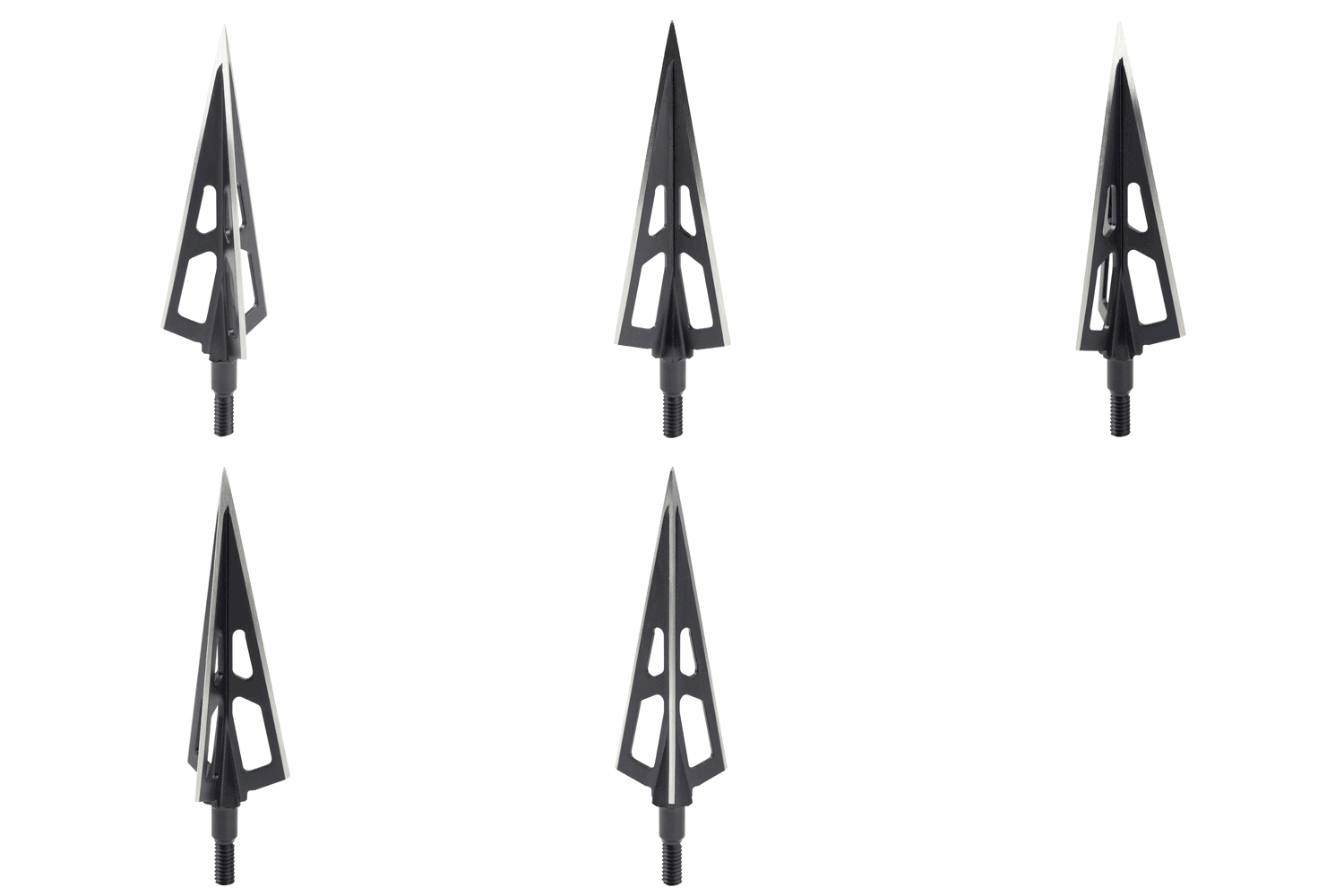
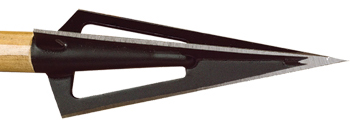
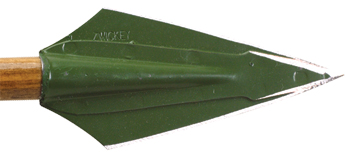
Woodsman Elite Screw-In Broadhead

To begin the selection process we need to narrow down the possible candidates. There are several ways to look at this: number of blades, bevel, and weights. But I personally always start with the simplest of questions: “What can I sharpen?” If a broadhead is not sharp it is not worth its weight in salt. Sharpness is an overlooked basic when selecting a broadhead. Start separating the candidates based on this basic criteria. There are many heads that are hunting sharp right out of the package like Woodsman Elites, Silver Flames, Zephyrs, and Alaska Bowhunting Supply’s Ashby broadheads. Out of those you have many types of broadheads like 2-blade, 3-blade, and single bevel that would satisfy the most discriminating archer. Even though you need little to no sharpening skills when you remove these heads from the package, you will need some honing skills to re-sharpen the heads after shooting. If any amount of sharpening is out of the question there are still some broadheads to fit the bill. Steel Force broadheads come in a variety of combinations from single bevel heavy weight heads to two and 4-blade double bevel combinations, plus Steel Force offers lifetime factory re-sharpening. Out of the package, these have to be the sharpest broadheads that I have ever encountered. Other choices in the category include Muzzy broadheads with replaceable blade
options. This limits other broadhead options, but if sharpening is the issue then simply removing the blades when they dull and replacing them with razor sharp new ones takes sharpening out of the equation.

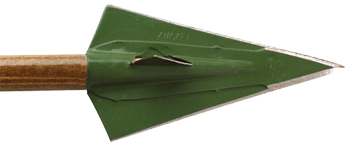
Zwickey Delta BroadheadThe final category of broadhead sharpness is the “you sharpen” broadheads. These types of heads are attractive to many traditional archers because of the lower initial cost, and with some sharpening they can provide years of service. Most all of them come out of the package with a fine edge on them, but they will require sharpening to make them hunting sharp.

Broadheads like the Woodsman original 3-blade, Zwickey two and four blade broadheads, Eclipse 2-blade, Ace 2-blade, and Simmons two and four blade heads are excellent choices and offer a wide selection of grain weights, blades, and bevels in both screw in and glue on types. They are perfect for those willing to break out the files and stones to put on a razor sharp edge.
DMT diamond stones, Lil’ shaver sharpeners and the KME broadhead and knife
sharpeners make this process very easy to accomplish.

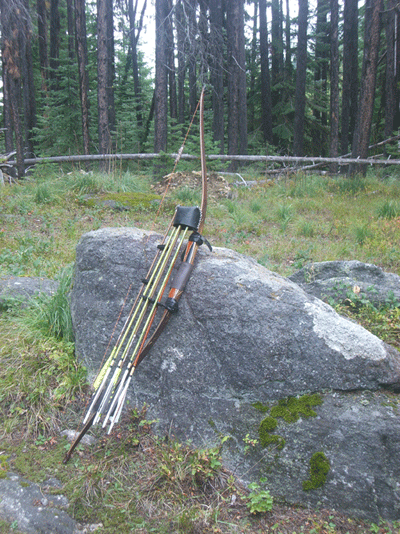
Dean's Moose Hunting Set-Up

Once the sharpening challenge has been surmounted I like to next consider weight. It can be a simple process of shooting various weight field points from 100 to 315 grains to find the appropriate weight that will provide good arrow flight from your set up. Or start with a predetermined point weight and find the shaft that provides the best arrow flight with that weight. Whether you are bare shaft tuning, paper tuning or flight tuning there will be a weight point at which your arrow selection and bow set up will shoot the best. Targeted set ups can also be calculated with programs like a dynamic spine calculator. Programs like this allow you to enter data about your bow and arrow, narrowing the process down so you don’t have to test a wide selection of shafts and points. The final goal is all the same; a perfectly tuned arrow set up. When your set up is perfected and tuned with a determined point weight and
you are comfortable with your sharpening ability, you have narrowed the field of broadheads to consider, making the choice a lot less daunting.

Now that a point weight has been determined we can start culling out candidates by blade and type. Two blade broadheads are the oldest design of broadhead. From the first primitive stone points to the most high tech single bevel heads, 2-blade heads are a tried and true effective design. Studies show two blade heads, and in particular single bevel two blade broadheads, are by and far the best penetrating heads. 3:1 ratio broadheads (3 times as long as they are wide) have a long and lean design, causing the blade to rotate and cut upon entry. This provides excellent bone-splitting capabilities and long wound channels characterized by the “S” shaped entry wound. Other time-tested heads like the Zwickey, Eclipse, Ace, Simmons and Stos should not be discounted either. The old saying “the sun never sets on a Zwickey” is very true. Few broadheads can boast greater than a half-century history, during which they have taken probably every land animal on the planet, from the smallest of mammals up to elephants. They are as effective and as relevant today as when they were first manufactured.

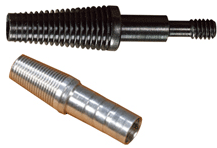
Steel & Aluminum Broadhead Adapters If a 2-blade design is what you are set on, separate the heads based on weight selection, bevel and your sharpening ability.

A wide variety of brass, steel and aluminum adapters of various weights make different weight combinations even more attainable with various heads. Cost will also become an issue here too. Some broadheads can cost as much as $30 per head or as low and $3 to $5 each. Consider how the broadhead is made and what advantages it offers for the price. Most of the time it will be the durability of the broadhead that is the deciding factor.

Zephyr/Eclipse & Simmons Bleeder Blade

Four blade heads for the most part are two blade broadheads with a replaceable pre-sharpened bleeder blade. There are a few exceptions, like Muzzy and Zwickey heads. But in the traditional style Zephyr, Eclipse and Simmons bleeders can be replaced and also shot with or without the 4-blade option. The advantage of the 4-blade option is that the wound channel will be opened on another plane, making it less likely for the wound to close. That way the animal will not bleed internally, and you will not have to worry about following small, obscure blood trails. The biggest disadvantage to a 4-blade is the impeded penetration caused by the bleeder blades versus a two blade head. Again thinking of deer sized game, this should not be an issue.

The final design of broadhead types to consider is the 3-blade broadhead. Although the number of three blade heads is not as diverse as two blades, they do offer a lot of variety. Woodsman original, Woodsman Elites, G5 Montecs, and Snuffer broadheads are among the most popular of the 3-blade heads. The Woodsman line offers the greatest variety of weights from which to choose.
Original Woodsman Glue-On Broadhead

With 100 grain to 250 grain weights, and with weight adapters for glue-on original and Elite heads, there is an array of weights that can be created. The advantages of the 3-blade are simple: superior flight characteristics, easy to sharpen & resharpen, and more cutting blade length than most other broadheads given the length and width characteristics. Because of the design of 3-blades heads they take the guesswork out of sharpening angles. By laying the broadhead flat across the two blades and honing/sharpening on files or stones, the process of sharpening becomes quick and easy. The near 3:1 ratio of heads like the Woodsman broadhead provides optimum penetration and superior blood trails due to wound channels, which means quick demise and recovery of game.

Once you choose a style of head there is still some work to do. Broadhead flight is a critical factor in performance. Do not assume that once you are tuned with field points that you just need put on a broadhead of the same weight and that is it. In some cases, broadheads can be interchanged with field points and flight characteristics will not change. However, in many cases there might be some tuning involved with the broadhead that you choose to shoot. Starting with a perfectly tuned field-tipped arrow means the broadhead is the only factor when starting to try various broadheads and weights. There are a couple of avenues to take in this stage of broadhead selection. If the broadhead being tested does not fly true, you can choose to tune the shaft or the bow to the broadhead. This requires a little more work since you would have to start the bare shaft tuning, taper tuning or flight tuning process as you did with the field point. The disadvantage that I find in this process is if you want to change from broadheads to field points throughout the year it is not as easy as taking a broadhead off and putting a field point on. I always want to keep my set up simple.

Once I have found a weight, blade and style that I am comfortable sharpening, my next step is test shooting a couple different broadheads that fit those criteria. At this point broadhead flight is the only thing to consider. To be lethal and accurate, a broadhead must have true arrow flight. There is no compromise at this point. If the broadhead you have selected is hard to tune or provides erratic flight, do not be afraid to select another head with similar criteria to test. When a big buck is standing in front of you too much is riding on your shot for you to not have 100% confidence in your broadhead tuning and sharpness.

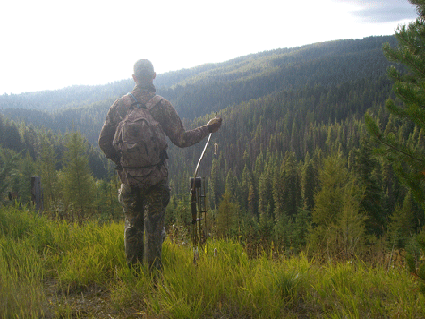
The Author admiring the great outdoors
There are many criteria to consider during the process of selecting a broadhead; from weight, style, what can be sharpened proficiently, tuning, and arrow flight. But now there is one final component: PRACTICE! Given all of these components, every broadhead is lethal given that you do your part and put the arrow where it needs to be. My personal rule is to almost exclusively shoot broadheads at least one month prior to season during regular practice. This provides extensive knowledge and confidence with your set up and flight characteristic of your broadhead and arrow. Once all of the pieces have been put together you will have the best broadhead to accomplish your hunting goals.

For more information contact:
3Rivers Archery
PO Box 517
Ashley IN 46705
260-587-9501
[email protected]

Converting ILF Limbs to DAS Bushings

DAS ILF – Converting ILF Limbs to DAS Bushings

Some fitting is required to convert ILF limbs for use on the DAS bow. Follow the instructions carefully and you will have no trouble.

  1. The first step is to remove the ILF dovetail fitting. Remove the screw from the top of the fitting. Remove the spring and plunger inside the fitting. Drill a 9/16″ hole in a piece of scrap wood. Place the limb on the wood with the fitting over the hole. Now use a plastic or rawhide mallet to carefully tap the fitting down and out. You will need a length of some soft material like hardwood, brass, or aluminum to drive the fitting all the way out. A better way to do this is to use an arbor press.
  2. The bushings required to adapt the limbs are sized to be a push in fit on Hoyt and Sky limbs. No sizing to the hole is required. For Korean limbs like Win & Win, Samick, etc., the hole opening on each side must be slightly enlarged from .369″ to .375″. You can do this by using a .375″ reamer, or a piece of sandpaper wrapped around a dowel. DO NOT USE A 3/8″ DRILL. Do not run the reamer all the way through the hole.  It will make the hole too large for ILF or DAS. The fit should be very snug, not loose. Go slow, be careful.
  3. Clean any dust out of the limb hole and wipe in a thin film of 5 minute epoxy.
  4. Press or tap in the insert using the wood block with the hole underneath to support the limb. Wipe off any excess epoxy and let it cure.
  5. To remove a DAS insert, thread a ¼-20 X 2″ bolt into the insert till it bottoms out. Place the limb over the wood block as you did to remove the ILF dovetail. Press or tap the insert out. The epoxy does not have too tight a grip so it will let go. NEVER HIT OR PRESS DIRECTLY ON THE INSERT!! IT WILL MUSHROOM AND BE A BEAR TO GET OUT!
  6. This step only applies to risers older than 2018. Newer models have extra limb clearance.– Next step is to measure the depth of the slot in the limb. The depth should be .400 inches to .420″. If the slot is longer it may contact the riser when installed and result in excess noise. The best way to measure the slot is with the tail end of a dial caliper. To reduce the depth of the slot, use a sanding block and take down the end of the limb until the slot is the right depth. Don’t go too far, the stuff sands pretty easy.
  7. The last step is to check the fit of the slot over the brass sleeve on the bow. Most limbs are a hair tight. Use the sandpaper (about 100 grit works good on an 11/32 arrow) and CAREFULLY enlarge the slot till the limb just slips on. It can be a bit snug, but sloppy is not good. Make sure the limb goes all the way down on the brass sleeve.
  8. To reseal the areas you just sanded, you can use a thin wipe of epoxy, superglue, or clear fingernail polish.
  9. The limb is now ready to use.

Sharpening Traditional Broadheads

By: Dale Karch and Todd Smith

Sharpening a broadhead with a CC sharpener
Sharpening broadheads is a misunderstood, but necessary art.

The guy behind the counter hands you your first pack of cut-on-contact broadheads. First there’s the blank stare… the deer in the headlights look. Then you see a glimmer of the light flickering on as the realization sinks in.

“You mean I have to sharpen ’em?”

This is a valid question that we get all the time. It makes sense too, if the only broadheads you’ve ever been around are the ‘razor-sharp right out of the package’ kind, then why would you have to sharpen them? The truth of the matter is, 95% of all cut-on-contact broadheads need to have their final edge sharpened by the bowhunter before they are taken into the field. The good news is, with the sharpening aids available to all bowhunters today it’s not difficult to do. Read on and we’ll describe some hand sharpening techniques as well as introduce you to some of the more popular tools and accessories available for sharpening traditional broadheads.

Woodsman BroadheadZwickey Eskimo Broadhead
Safety first. Use extreme caution whenever working with broadheads.
They are extremely sharp and may cause serious injury or death if used improperly or carelessly.

Hand sharpening without sharpening jigs and aids is demanding but also gratifying. Many bowhunters take pride in the fact that they can sharpen broadheads well this way. Before starting the sharpening process, mount all your broadheads on your arrows and make sure they spin straight and are installed correctly. As you go through the steps of sharpening, you’ll need to continually check the finished edge for sharpness. How you test for sharpness is up to you. In bowhunter education courses we teach a technique of stretching rubber bands across a small wooden frame from both directions to create an overlapping pattern. Then we push the broadheads through. If they cut the rubber bands easily, the broadheads are sharp. Most archers simply see how well the broadheads shave the hair off of their arms. We do not recommend this as the potential for injury is too high. Some folks carefully rub the edge of their thumb sideways across the edge. (Not along the edge! If you do that you’ll cut yourself for sure.) In time, you’ll acquire the knack to know, by feel, just how sharp the edge is. Once you think it’s sharp try the rubber band test.

Now, let’s sharpen some broadheads.

Well-designed, quality broadheads will be easy to sharpen. Take a close look at the factory grind. This is the angle of the grind on the broadhead right out of the package. It should be a smooth, straight, gradual grind terminating to a nice ‘almost sharp enough’ factory edge. Broadheads with grinds like this will be easier to put the final edge on. As we mentioned in the last column, another key to good broadheads is having the steel tempered hard enough to give you strength, but soft enough to allow you to sharpen them with a file. We recommend giving your broadheads the file test. Make a pass or two along the bevel of your broadhead with a good quality file. If the file skips off the broadhead and doesn’t bite into the steel, the steel is too hard for file sharpening. This is not necessarily the end of the road for that broadhead as there are diamond hones on the market that can sharpen nearly any steel no matter how hard it is. Still, for the bowhunter who wants to be able to re-sharpen broadheads in the field, they must pass the file test.

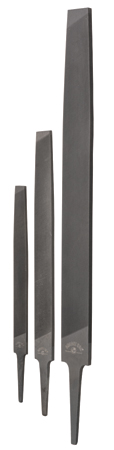
Two and four blade broadheads first. For smooth stock removal, we recommend a bastard file. For home sharpening a 10-12″ file is suggested. For ‘in the field’ sharpening get a 6-8″ model. Buy only high quality files, this is not the time to scrimp. Right-handed bowhunters will normally hold the arrow in their left hand and sharpen the broadhead with a file held in the right hand. Some people chuck them up in a padded vise and there is even a tool on the market called the Arrow Grabber that you hold in your hand and it supports the arrow and broadhead while you work.

Bastard FilesArrow Grabber
A bastard file and Arrow Grabber are valuable broadhead sharpening accessories.

We always file from the back of the broadhead toward the tip. You can sharpen from either direction and there are arguments that defend both schools of thought. Still, sharp is sharp, so file in whichever direction you prefer.
The object is to follow the primary angle of the main bevel, removing the same amount of steel from both sides until you have a very thin, razor sharp edge. Before you see the final razor edge, you will see what is called a ‘wire edge’. This is the result of removing stock evenly from both sides of the broadhead. The wire edge is a sign that you’re doing a good job and you’re almost there. When the wire edge is removed properly, a sharp edge is left behind. It’s a good idea to count the number of strokes you make on each side. Push firmly but not too hard. You’ll be able to feel when the file is removing steel. You may want to take a marker and color in the factory bevel. Then when you start making passes with the file you’ll be able to where you have removed material and you can adjust your angle as needed as you go to match the factory angle. Once all of the ink is removed, go to the other side and repeat the process. Many bowhunters believe in and use the coarse, ‘file sharpened’ edge that you’ll have at this point and this is as far as they go. To really finish the edge though, some sort of stropping is still necessary. You can use a piece of tooling leather, a hard Arkansas stone, or even ceramic crock sticks for this. Smooth, steady light pressure is the key here. The closer the edge gets to final sharpness, the lighter your strokes need to be. When you’re finished stropping, test for sharpness. If they pass inspection, they’re ready to hunt.

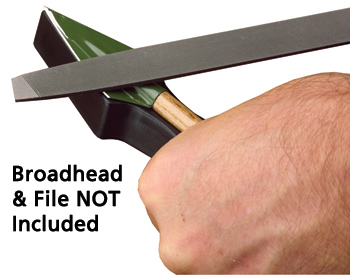
Three-blade broadheads like the Woodsman are actually quite simple to sharpen if you follow some basic guidelines. The nice thing about three blade broadheads is you always work on two blades at a time so the blades themselves act as guides helping you maintain the all important, consistent angle. For these 3-blade broadheads it’s best to first mount them to your arrows and use the shaft as a handle to pull the broadheads across your sharpening tool. Start with a 12″, quality single cut bastard file. This file will be wider than the two blades of your broadheads so you can remove material from both blades at the same time. Don’t press too hard! This is the mistake most people make when sharpening broad heads. Light, steady pressure consistent throughout the stroke is the key. As mentioned before, you may want to use a marker to cover the factory bevel and help you gauge how much material you have removed. If you mark over the bevels and only remove enough material to remove the ink, then go to the next two blades, then to the third set, you should have removed almost the exact same amount of material from each blade. This leaves you ready for polishing. The polishing step is best done on a fine diamond sharpening surface like the JewelStick® Diamond Bench Stone. Remember light controlled strokes. Now your three-blade broadheads should be ready for hunting, but you may also want to strop them lightly on a piece of tooling leather at this point. This final stropping action will align the microscopic steel particles taking your edge from sharp to ‘scary’ sharp.

Woodsman 3-blade broadhead
Three blade broadheads like the Woodsman are quite simple
to sharpen if you follow some basic guidelines.

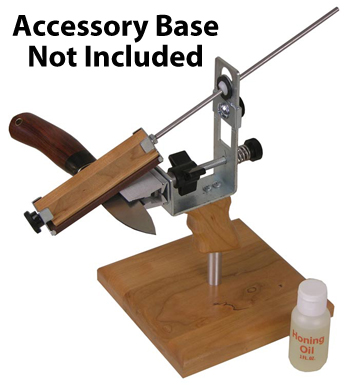
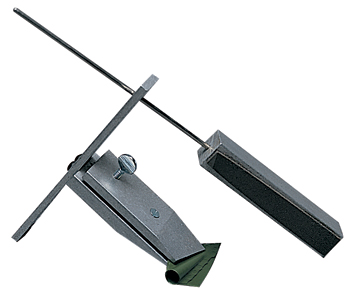
If you did everything described above correctly your broadheads are ready. If not, you might be thinking that the process is easier said than done. You would not be alone! When sharpening anything, maintaining a consistent angle is the key. This is where most people run into trouble and this is exactly why there are so many excellent sharpening systems and aids available on the market. Some of the most common are: The KME Knife Sharpening System, 3Rivers CC Sharpener, Lil’ Shaver, and the Hollowground Sharpener.

KME Knife SharpenerHollow Ground Broadhead Sharpener
For fast and accurate sharpening, you can’t beat using a sharpening jig.

The Lil’ Shaver is another tried and true unit. It’s a jig with three angle choices built into it. Clamp your mounted or non-mounted broadhead into the jig. A file on a positioning block does the cutting. Slide the jig arm through the locating hole of the jig body and push the file against the broadhead from one side to remove stock. Then take out the arm, flip the unit over, re-install the arm and stroke this other side of the broadhead until a sharp ‘file sharpened’ edge results. This jig sharpens all two or four-blade heads. The file that comes with the kit is aggressive and removes stock quickly. The LIl’ Shaver is another good choice for re-shaping blunt factory grinds or reestablishing a good primary angle on dull broadheads.

Lil' Shaver Broadhead Sharpener
The LIl’ Shaver is a jig with three built-in angle choices.

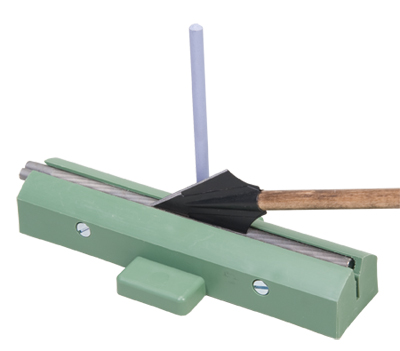
The Hollowground Sharpener is a bit unorthodox but very effective. Instead of flat, it uses two round files to sharpen and they actually create a slightly concave shape to the edge. Quite a few archers put faith in this hollow ground edge and it is a strong seller. The kit includes a ceramic rod for polishing the final edge. For the fans of hollow ground edges, this sharpener is a good choice.

Hollow Ground Broadhead Sharpener
The Hollowground Sharpener uses two round files to sharpen,
creating a slightly concave shape to the edge.

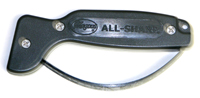
Have you got all that? Good! But wait, there’s more. Now for the rest of the story. For broadheads that have good factory grinds right out of the package, or for broadheads that you’ve used a sharpening aid to revamp the edge, here are a couple of tools that take you to ‘hunting sharp’ with the greatest of ease. They are the AccuSharp and the 3Rivers CC Sharpener. Both of these sharpening tools utilize carbide teeth to actually strip metal off of both sides of the blade bevel at once. Especially if you already have a wire edge established, these tools will remove that and align the entire final edge resulting in a sharp, ready to hunt broadhead in a matter of moments.

The AccuSharp has a comfortable handle and a safety guard to protect your fingers. Operation is simple. Hold your arrow on a hard surface and draw the AccuSharp from the back of the head to the tip. Repeat as needed with less pressure each time until you are satisfied with the edge.

AccuSharp Knife and Broadhead Sharpener
The AccuSharp offers simple operation as well as safety features.

The 3Rivers “CC” (Ceramic-Carbide) Sharpener also uses carbide teeth, but with this tool you hold the unit on a hard surface and draw the broadhead through and between the teeth allowing it to remove metal on each pass. As always, use less pressure as you continue. Once you are satisfied with the edge, stop. The “CC” also has the advantage of a ceramic surface that can be used like a crock stick for finally polishing of the edge. You may even alternate at the end of the process between the teeth and the ceramic stropping surface until you reach ultimate sharpness. This sharpener is one of the handiest tools we’ve ever found for broadhead and knife sharpening. They’re small (approx 3/4″ x 3″), lightweight, and sharpen edges perfectly! Keep one with you at all times when hunting for fast field touch-up of broadheads and hunting knives.

3Rivers CC Sharpener
Small and lightweight, the 3Rivers “CC” Sharpener provides two
sharpening surfaces… one carbide and the other ceramic.

As you can see, broadhead sharpening is a bit of an art. A very straight forward and necessary element of bowhunting with cut-on-contact broadheads. It’s an important skill to learn, and whether you hand sharpen with a file or take advantage of some of the many time saving commercial sharpening systems available, always make sure your broadheads are, ‘hunting sharp’. We owe it to ourselves, to the animals, and to the great sport of bowhunting. Yes, you’ll have to touch up those edges yourself but after a bit of practice and with the right tools, you’ll have no problem at all sharpening traditional broadheads.

Keep Hunting
Dale Karch & Todd Smith

For more information contact:

3Rivers Archery
PO Box 517
Ashley IN 46705

260-587-9501

[email protected] or check us out on-line at 3RiversArchery.com

Building Wood Arrows, Where to Start

3Rivers Hunter's Arrows

Wood is the most prolific and successful arrow material ever used by man. They’ve been in continuous use for thousands of years, keeping us fed, protecting us from enemies, and delighting us in bow hunting and target archery venues. Yes, wood arrows have withstood the test of time. To Americans, they’re beautiful reminders of the old days of archery and bow hunting in this great country of ours. They’re reminiscent of the classic wood and canvas canoe, having been all but replaced by modern high-tech, low-maintenance materials, but to anyone willing to give them a chance they’ll open a portal to a more simple time, when US craftsmanship created functional products that performed flawlessly. It’s easy to gain an appreciation for wood arrows and very gratifying to make your own.

Today we’re discussing the basics of how to get started building wood arrows. We’ll cover some general knowledge of wood shafting, straightening, fletching (gluing on feathers), tapering, mounting points, and the basic tools needed when building your first set of wood arrows.

Wood arrows can be phenomenal performers, if assembled properly and matched to the bow; they are capable of near perfect flight. If you’re intrigued with the idea of using wood arrows but you think you’d like to try them out before taking a shot at building your own, it’s best to pick up a dozen already made arrows from a reputable dealer. Our 3Rivers Hunters arrows are perfect for that.

Even when buying pre-made wood arrows there are skills you’ll need to learn like straightening, cutting and tapering, and mounting
points
. We’ll assume you’ve purchased either pre-finished shafting or pre-fletched arrows and take you through the remaining steps to the completed arrow.

Wood arrows are a natural material and as such they aren’t inherently straight. Newcomers to wood arrows often think they should be perfectly straight like aluminum arrows and carbon arrows but that’s an unreasonable expectation. Wood CAN be straight like that, but they have a tendency to wander. For instance, you can order Pre-made 3Rivers Hunter wood arrows and find a couple that aren’t straight when you get them. Even if they were straight when they were shipped they can move by the time you receive them. Note: Of all the arrow woods, Port Orford Cedar is one of the most willing to stay straight. When first trying wood arrows, we recommend that you look for Port Orford Cedar.

To fly as accurately as possible, arrows must be straight. Wood is no exception. Learning to straighten wood arrows is a must. Once you learn to straighten wood shafts the rest of the arrow building process is fairly easy. It takes practice, but it’s relatively simple to learn.

Hand Straightening Wood Arrows
The heel of the hand method of straightening wood arrows has been the standard method for years. In “hand straightening” you sight down the shaft looking for a bend. When a bend is found place the center of the high point of the bend against the fleshy heel of the left hand and grasp the far end of the shaft with the right hand. As the right hand pulls the end of the shaft toward the chest of the Fletcher, the left hand not only resists the force of the pull, but also flexes up against the shaft forming a cushion for the shaft while the far side of the shaft is stretched.

Think of it like this, the short end of the bend has shorter fibers and by stretching them as described, they lengthen. The wood on the high side is compressed while the short side is stretched. Care must be taken to apply just enough force. If done correctly the wood will learn a new position, a position of straightness. If too much force is applied the shaft will either break or the compression side will rupture forming wrinkles on the surface called crystals. Once this happens it’s time to discard that shaft, it’s no longer safe. This technique is easy to learn, it just takes practice to master.

The archery market has several arrow straightening aids offered like the Ace Roll-R-Straight. These tools are easy to use; they burnish the surface of the shaft on the long side of the bend. Beginning arrow builders have good success rates with these tools and arrows straightened by burnishing seem to stay straight longer than when hand straightened. Either technique works, try them both and then decide what’s best for you.

Before you can glue your feathers on, you’ll have to install your arrow nocks. The same fletching glue used for attaching the feather fletchings is used for installing the nocks. When gluing on nocks it’s important to make sure they’re in perfect alignment with the shaft. This allows for consistent launches from the bow as well as a more aerodynamic projectile. If you look closely at wood arrows you’ll be able to see how the grain runs through them. One side looks like lots of lines running from end to end of the arrow. The other side looks like it has points. It’s like the old days of wooden baseball bats. We always placed the trademark up because that aligned the edge of the growth rings, the strongest side, against the force of the ball. It’s the same with arrows. The edge grain side is the strongest and is the side you want to travel along the sight window at the shot.

When it comes to adding feathers to your shafting you’ll need fletching glue, a fletching jig, and the feathers themselves. When selecting fletching glue you’ll need to know if it’s compatible with the finish used on the arrows. If you use an incompatible adhesive your feathers will likely fall off. Always check to make sure the adhesive you use is compatible with the finish on the shafting.

Choosing a fletching jig can seem confusing because of the large selection available but is easy once you identify your needs. If you’d like the best fletcher money can buy, go with the Bitzenburger Dial-O-Fletch. They’re known as the best fletching jig ever offered and will last a lifetime. A fletching jig is an investment and we suggest that you go with the jig that best fits your personal needs. Be sure to check out all of the fletching jigs we offer.

When it comes to feathers we’ve found that TrueFlight Feather Company offers the highest quality feather fletchings in the world. We’ve seen our share of samples through the years and no one has ever been able to match the quality and precision of TrueFlight Feathers. Which shape should you use? Should you use right or left wing? Trust us on this one, feather shape is a personal thing. Don’t sweat over which one to pick. We get folks all the time who agonize over which shape will give the best performance, least amount of noise, and look good all at the same time. This is an instance where shooting what you like won’t hurt you. If you like the looks of shield feathers, shoot shield. If you prefer parabolic, go with parabolic. You’ll never be able to detect a difference in the performance. Use what you like. You’ll be glad you did.

Right wing or left wing? First, right wing feathers are from the right wing of the bird and left wing feathers are from the left. That’s all there is to it. Which wing should a right handed or left handed archer shoot? We’ve tried them both and can find no noticeable difference. Some folks will tell you with certainty that it’s got to be one way or another, and they don’t even always agree. Try it for yourself. The one legitimate rule is, don’t mix wings on the same arrow. For proper flight, all feathers on an arrow must be from the same wing. We’ve found which wing is most popular this seems to be a regional thing, but neither is really better than the other.

When mounting feathers on the shafts, we like to see the feather placed in the clamp with the trailing edge between 1/2″ and 5/8″ down for the nock. This allows for some finger clearance. Mark this location on the clamp so it acts as a quick reference point. Make sure the feather is lined up with your mark and flush along the base. Either add a smooth line of fletching
cement or a Feather Fletching tape to the bottom of the quill then place the clamp into the jig and bring it into contact with the shaft. If using cement, a thin line of the adhesive should squeeze out from the edge of the feather base. Wait at least 15-20 minutes before removing the clamp and repeating the process. If using feather tape, after pressing the feather into place, remove the clamp at once and run a finger along the feather base to assure full-length contact. No additional waiting is required. Simply move on to the next feather. Yes, feather tape is FAST! It’s an excellent choice and has been compatible with every arrow finish we’ve tried it on.

Finally, you’re ready for mounting your points. If you didn’t get your shafts cut to length and tapered you’ll need to do that now. For cutting to length, measure from the valley of the nock to the length you desire then add the length of the taper before cutting! When you taper your shafts the finished taper should be anywhere from 3/4″- 7/8″. If you’re targeting a 28″ finished arrow, you’d measure from the valley of the nock forward to the 28″ mark then add the 3/4″ of your taper and cut the shaft. A small home miter saw works well for this but you can even score the shaft with a knife and snap it off at the score line.

Once the shafts are cut to length you must taper them. You’ll need a taper tool. There are a couple hand-held versions available. The small plastic kind is OK and should work for the person who only makes a few arrows now and again. The True-Center V2 taper tool is machined from aluminum, comes with three different arrow diameter guides, and should last a lifetime. It even has adjustable blades putting you in control of how aggressively the tool will cut. It’s the best hand-held tapering tool on the market. You can also get a power taper tool called the Woodchuck Taper Tool. They’re very nice, have adjustments built in and produce clean precise tapers. When considering which taper tool you want, remember that you’ll use it for arrow building and repair for as long as you shoot wood arrows.

The final step is mounting your points. Field points are the easiest. Broadheads take a bit more care, as they need to be perfectly in alignment with the axis of the shaft to fly correctly. Do yourself a favor and make sure to go back through and check your arrows for straightness before mounting the points. Straight shafts make the point mounting process much easier.

Hot melt glue; sometimes called ferrule cement, is the normal adhesive used for mounting points to wooden arrows. Being heat reversible it allows you to change your points whenever you like.

To mount points with hot-melt adhesive, you’ll need a heat source. We prefer the old standby, the alcohol burner. They run on denatured alcohol, which can normally be purchased wherever paint is sold. The flame is hot, free from soot, and seems the perfect match for mounting heads.


Tip: Before mounting any points take a cotton swab, dip it in alcohol and wipe out the inside of your point. This eliminates any residual oil or chemicals that may have been left behind from the manufacturing process.


Light your heat source and hold the tip of your hot melt above the flame. When it has melted a bit, roll the point taper of the shaft on the adhesive until you see a thin uniform layer of glue form. Now place your point on the taper and slowly heat the point. The idea is to get the point, the glue, and even the shaft all warmed at the same time. When you feel the temperature is right take pliers and hold the point while you turn the shaft inside the point. We have a special tabletop we use for mounting points and at this time we invert the shaft and press the point into the tabletop spinning as we go. What you’re watching for is the shaft and point spinning straight. If you notice the point wobbling, adjust with a tweak of the pliers and spin again. If the glue gets too cool to allow adjustment, heat it again and repeat until you have a nicely spinning arrow.


Tip: For broadheads it’s best to align them up all the same. For two-blade heads that usually means that the blades are aligned either vertically with the bow or horizontally. Do whichever you like, but do them all the same, it’ll ensure consistency of flight and it’ll look like you really know what you’re doing!


Now that you understand the basics of how to make your own wood arrows we invite you to give it a try. Once you get into it and get a few dozen arrows under your belt you’ll realize just how fun and gratifying it is. It can be addicting! Give it a shot, there’s nothing more satisfying than shooting wood arrows you crafted with your own two hands.

For more information contact:

3Rivers Archery
PO Box 517
Ashley, IN 46705

866-87-9501

[email protected]
or check us out on-line at 3RiversArchery.com

5 Tips for Bow Hunting the Rut

by Denny Sturgis Jr.

Implementing these five tips into your rut hunting game plan could tip the odds in your favor this season.

Denny Sturgis Jr with a Beautiful Buck

When the rut approaches, numerous things are changing in the whitetail world. Priorities change for most bucks. Food and security slide down the list to make room for propagation and buck movement increases dramatically. Crops are being harvested in agricultural areas and leaves are dropping reducing available cover. Temperatures are falling and many food sources begin shifting also. As hunters, we need to adapt our thinking for these changes.

#1 THINK LIKE A BIRD DOG

When bird dogs encounter a large strip of cover to search out for game they don’t have to cover every inch. They can simply cruise on the downwind side of the cover Bowhunter using the 'Bird Dog' method and effectively search the whole strip with their sense of smell. Bucks in search of receptive does do the same thing. John Hale, a noted hunter of big bucks with traditional equipment, shared this with me back in 1991. I was hunting down in Illinois when we met to have dinner one night during the rut. The bucks were constantly harassing the local does. The does were sneaking around with their tails clamped down tight and bedding in the thickest cover to avoid the aggressive bucks. John was easing into the downwind side of the thickest bedding areas he knew of and climbing into a treestand on or just inside the area he figured a buck would walk through. He didn’t even place his stands that high depending on the cover. He said many times setting his stand at eight feet high was plenty high to go undetected. He reported seeing and passing shots on numerous bucks so far that season and had proven the method numerous times on big bucks over the years. Later in the week on that same hunt I used John’s advice to collect my first Pope and Young buck. I placed my stand fifteen yards in the off the downwind edge of a thick, brushy hollow choked with honeysuckle. Sitting in the stand since first light I’d passed on shots at several smaller bucks. At 2:15 pm a bigger buck popped up out of the hollow chasing a doe and hesitated within easy range allowing me to shoot.

#2 HOT WEATHER RUT? – WATER

Whitetail does drinking water during the Rut When temperatures rise during the whitetail rut it seems to shut down a lot of the normal increased movement. The rut will carry on though because fawns are still born the same time every spring. Since I started hunting water sources, I no longer dread heat waves during the rut. In fact some of my hunting buddies and I use it to our advantage. We’ve had nice bucks drink in the morning before going to their day beds and also come in the first thing after rising in the afternoon. Does need water also and can attract bucks in during the rut. I was sitting all day in a large woods during a hot spell years ago. At high noon, a huge buck appeared from a draw and plodded over to a tiny pot hole in the woods with his mouth hanging open. He tanked up like a camel and sauntered back into the draw he came from.
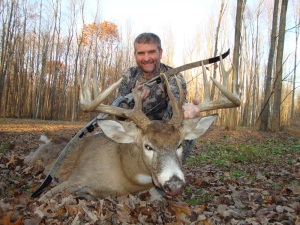
I’ve had good luck hunting over small water holes and ponds. The banks and mud are easy to check for tracks and figure out how to set up. Other areas are more difficult to figure out. Nick Niblock with big buckOne area I used to hunt had multiple swamps. At times they all had standing water in them. While the deer could drink anywhere, they had a couple preferred spots where they watered. Both were located on outside corners of the swamps. I’m not sure why they preferred these spots, but I know on warm days in November they are great treestand or blind locations. I’ve also noticed dried up drainage ditches and creeks will sometimes have pools of water left behind in low spots that can become prime water sources.

Rich Niblock, is one of my hunting pals from Michigan. He has killed several of his best bucks over water. One of the farms he hunts has a beautiful, flowing stream snaking through it. While deer do drink from it, he says they prefer a stagnant pool on the edge of a marsh that was dug out decades ago for some reason.

#3 HUNT THE DOES

'The Gauntlet' hunting the rutI’ve had some early season spots that are doe and yearling paradise. We seldom see any bucks in these areas early. When the rut starts though buck sign appears seemingly overnight. My wife and I hunt a quarter mile strip of trees that we call the gauntlet. It’s normal to have three to five groups of does filter past early in the season. When the rut comes, buck rubs and scrapes appear and bucks seem to wait in ambush for the does the run the “gauntlet.” Remember the doe spots you find early and check them when the rut comes. If the does are still there chances are they will have male company.
#4 KEEP SHOOTING SHARP

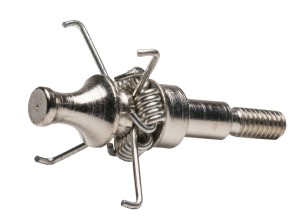
Zwickey Judo small game point
Zwickey Judo screw-in point

The rut can be a challenging time for most bowhunters. We want to spend as much time in the woods as possible, but with all the other obligations in life it can be frustrating at times. I think it’s important to keep in top shooting shape; especially during the rut. This is the time of year that most of us practiced all summer for. I carry a hammer or judo tipped arrow and try to get in a few practice shots at the truck or walking in and out. I also have a bag target in my garage. I can only get a five or six yard shot, but I think it helps to stay focused, keep shooting muscles toned and also lets me check to make sure gloves and heavier clothes aren’t going to alter my shot.

#5 HUNT WITH YOUR EARS

During the rut, your ears can be a great aid to your hunting. Most of us hear buck grunts, fighting, wheezing and chasing. Grunting or wheezing back can sometimes provide positive results. Some of the areas I’ve hunted are super thick. I’ve had good luck moving to the chase/grunting areas undetected and climbing a stand (if available) or setting up on the ground. I’ll often use the sounds I heard in the morning to select an afternoon stand location.

Dale Karch with big non-typical whitetail buckThe best example I can think of for using your ears to hunt was experienced by my friend, Dale Karch. Dale and his wife, Sandie, own 3Rivers Archery. He was invited by True Flight Feathers to hunt their property in Iowa for whitetails. One morning in November, Dale positioned himself in a ten foot high ladder stand 10 yards inside the edge of woods that necks down between a creek and a high weed, CRP field. He heard a deep grunt resembling a hog when he entered in the dark. Around 9:00 he heard a grunt again. It sounded close, but scanning and glassing the area provided no clues. A lone doe walked between the CRP field and his ladder stand a short time later. Dale said the doe was staring at a clump of brush about fifty yards away from the ladder stand. She walked closer with her ears rotated forward and bobbing her head up and down focused on the brush. Dale figured the grunts were coming from there. The doe wandered off finally around 10:00 and Dale quietly climbed down and stalked the brush pile. Upon arrival, he found nothing and glanced around puzzled. Twenty-five yards away he noticed a crab-claw antler tine sticking up out of the CRP grass in a slight gulley. He nocked an arrow and crept closer. A big non-typical buck was bedded, facing away on a narrow ledge cut into the bank of the gulley. Dale eased into less than twenty feet, rose up and delivered a Woodsman broadhead into the vitals. On impact, the buck jumped up and into the bottom of the five foot deep gulley where he mired into two feet of mud and expired right there.
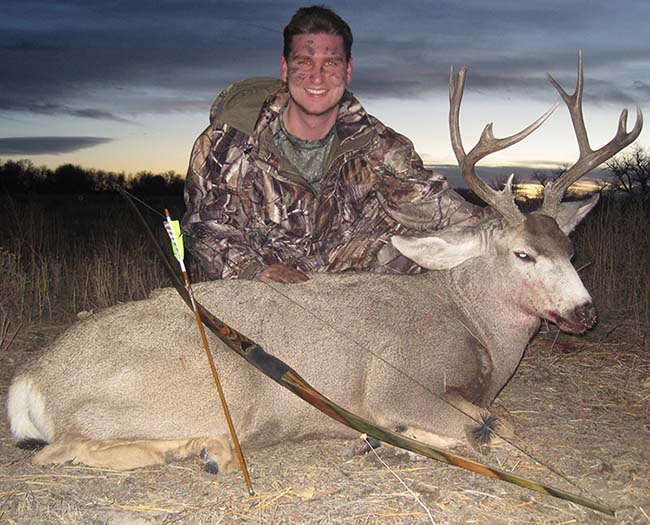
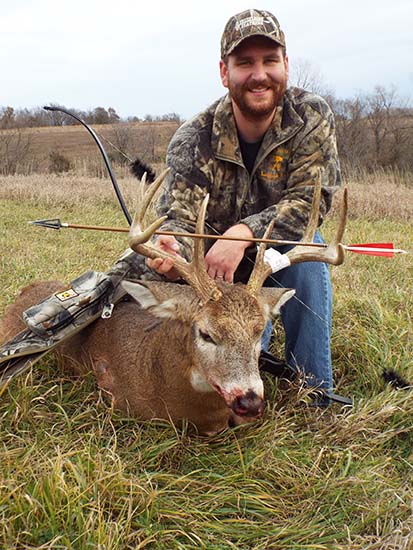
GOOD LUCK THIS RUT!

There are no guarantees in hunting, but here’s hoping that following these five rut hunting tips help you with arrowing a trophy buck. Be sure to share in the comments below any tips you have and email in any success you have this deer season.

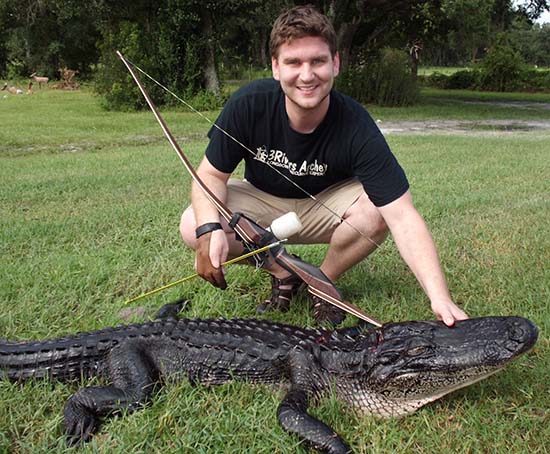
Johnathan Karch 2011 Florida Alligator

Name: Johnathan Karch
Country Harvested: United States
State/Province: Florida
Year: 2011
Type of Game: Alligator
Equipment Used:

Tomahawk Bow: Legacy Series 60#
Yellow Jacket Fish shaft with Steel Force Gator head
AMS original series bowfishing reel with Big Game conversion

Additional Info:
Photo: Johnathan Karch with his first alligator

Johnathan Karch 2014 Iowa Whitetail Deer

Name: Johnathan Karch
Country Harvested: United States
State/Province: Iowa
Year: 2014
Type of Game: Whitetail Deer
Equipment Used:

DAS 64″Recurve 45# (21″ riser, foam core limbs)
Traditional Only 340 carbon arrow
Woodsman Original Series broadhead

Additional Info:

Biggest deer I have shot in my life (so far)!

Photo:

Back to Top