






.jpg "Welcome to the 3Rivers Archer's Den")
How to Cure Target Panic
by Sam Strong
There’s not much that can be worse in traditional archery than hearing the dreaded words “target panic.” Target Panic is a mental block causing the archer’s form to break down and wreak havoc on your shooting skills. It can sometimes be described as a fear of missing the target. Other archers describe it as shot anticipation. In other words, it’s the expected recoil of the shot, similar to flinching when shooting a firearm. Your body braces itself for what is going to happen at the release.
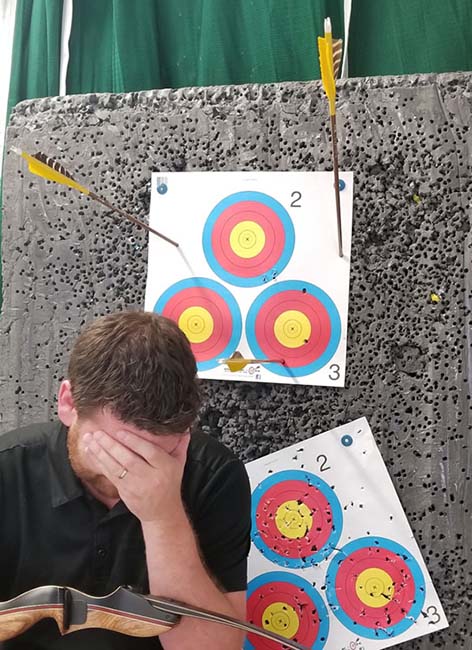
Regardless of the definition, I think it is safe to say that target panic is a failure in your shot sequence. It can ruin a lot of the hard work that is put forth into perfecting your form. Fortunately, there is a lot of information regarding techniques and accessories to help you get back on track.
It often starts when an archer places to much mental pressure on making the shot and the fundamentals aren’t followed through, leading to erratic shooting. Probably the most notable flaw is having an inconsistent anchor point. Some archers find themselves unable to get to full draw. Other shooters start to collapse at the shot and their form breaks down just prior to releasing an arrow.
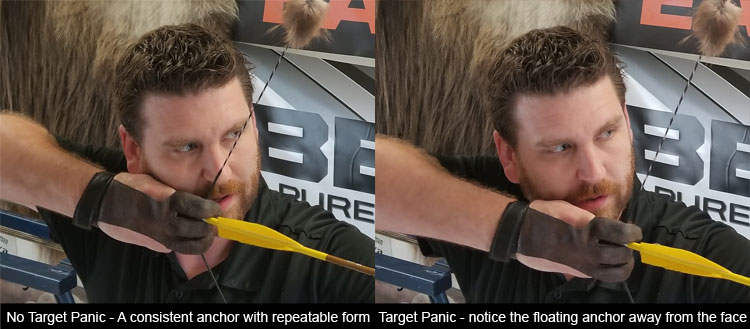
One of the unique things about target panic is the fact that it may not be noticeable at first, but over time it becomes a full blown problem. The first thing in being able to cure the target panic is recognizing and diagnosing the problem. If you find yourself letting go of the string too soon, not coming to full draw, creeping before the shot, having a poor release, or losing your composure, you just might have the feared disease called target panic.
Overcoming the problem is best done by using a controlled shot sequence. A controlled shot sequence is one where the archer goes through a mental check list, making sure each part of the shot is done properly and precisely the same way each time. Instead of drawing back and shooting, you focus on the individual aspects of the shot. For instance, you break it down into the draw, the anchor, the release, and follow through.
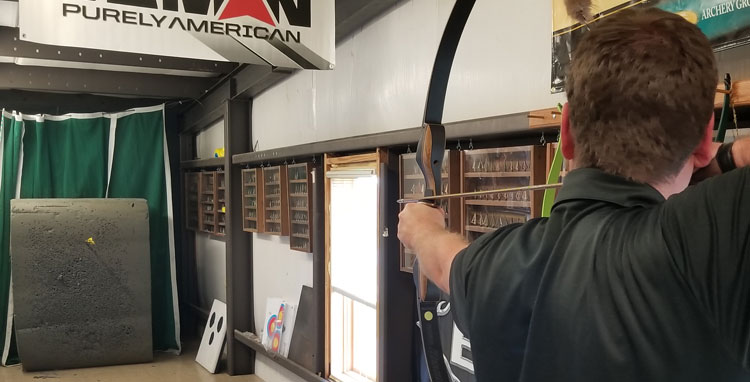
Another technique often used is blind bale shooting. Blind bale is a term used where the archer is shooting at a very close target. Some shooters will close their eyes while doing this exercise while others might not release an arrow at all. The idea is that you learn to focus on the shot sequence and the mechanics, not the target itself. This method is a great way to help develop your form as you “feel” the shot. Just be conscious that you will need to transfer what you have been working on over to the actual shot sequence.
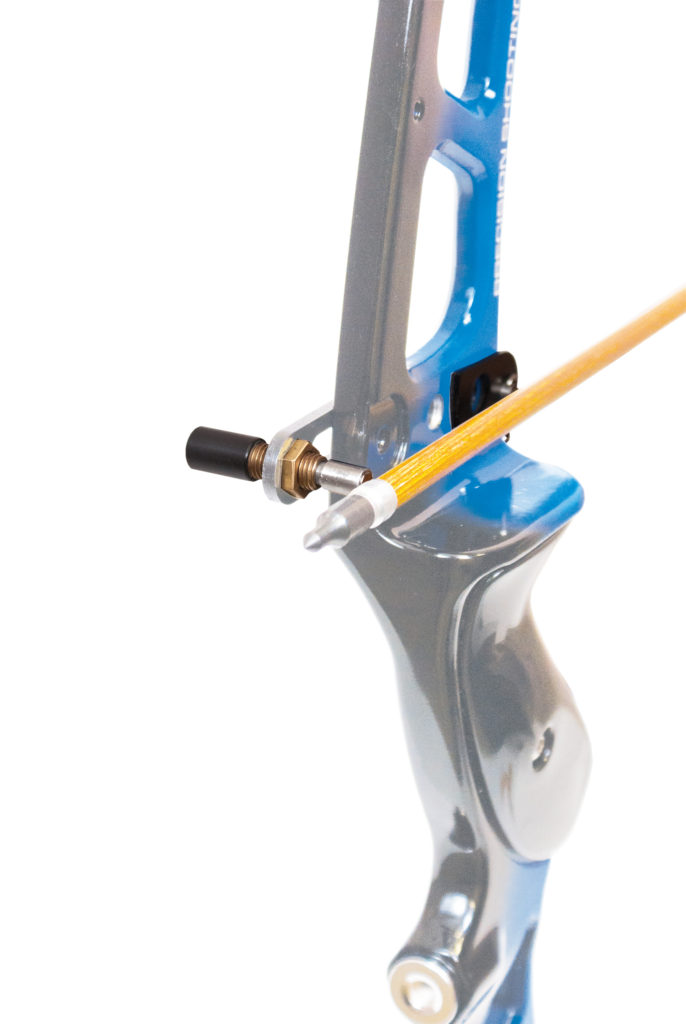
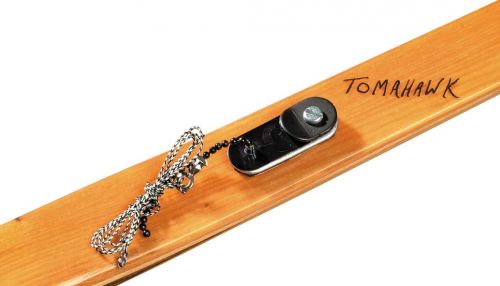
Draw checks are great tools that aid in curing target panic. There are several different types available and often referred to as “clickers.” These devices ensure that you reach full draw each time by giving an audible click to let you know you are at full draw.
Other devices include grip sears and tab sears. They can be somewhat difficult to explain in writing, but it works by giving an audible cue after going through your shot cycle. As you draw the bow, you place a slight amount of pressure on the sear. With practice, you develop a rhythm where as draw the bow pressure steadily increases. When you are at full draw, you use the last bit of back tension to pull through the shot causing the sear to click. This gives an audible cue and a psychological (or mental) note to release the string.
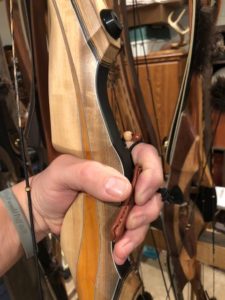
Another device called the Handy Clicker has gained some popularity. It works very similar to a grip sear, but is not attached to the bow. It can also perform as a tab sear, giving the shooter a couple of options to see what works best for their needs.
I think the best advice is learning to re-program your mind and create a shot sequence. By separating the shot into different tasks, such as the release, the anchor, etc., you can develop better form. By concentrating on one aspect of the shot at a time and then linking the tasks together, you eventually learn how to control the shot.
Learn to trust your equipment, your form, and your skill, will lessen the anxiety of the shot. In the end, you will be back to shooting more confident and more proficient than you previously have ever been shooting.
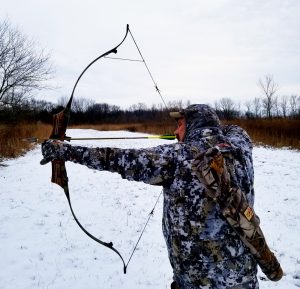 A clicker, or draw check, makes an audible noise (click) when an archer hits his desired draw length. They are used by almost all Olympic archery shooters to achieve the precision accuracy needed to succeed in that field. They work great as a signal, or trigger, to release the arrow.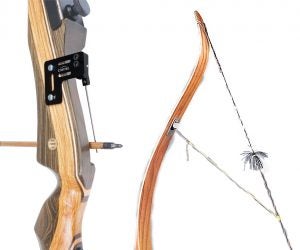
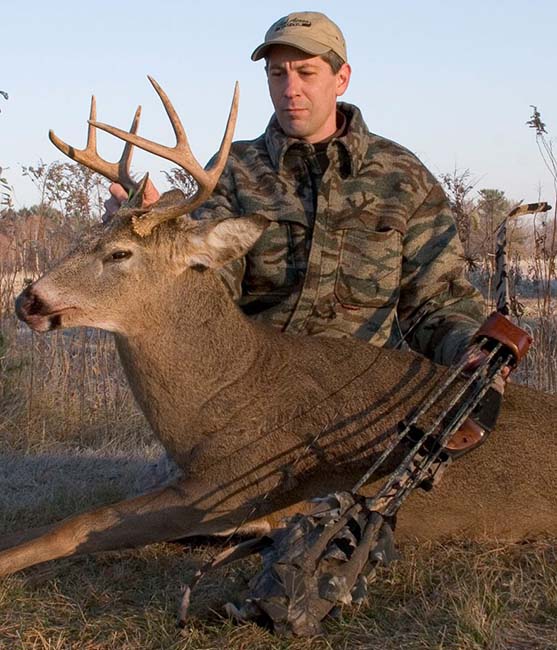 I consulted with Jason Wesbrock who has successfully used a clicker for years. Jason is an amazing bowhunter, world champion archer, and star of
 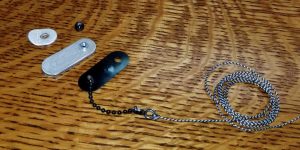 Step 1: Remove the clicker blade, the piece of metal that makes the noise, from the clicker. For the Crick-it clicker mine required a Phillips screwdriver.
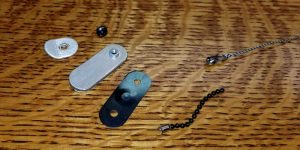 Step 2: You want to remove the chain grommet from the clicker blade. It may require a small amount of force, but be gentle.
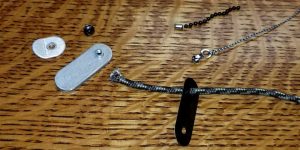 Step 3: Slide
 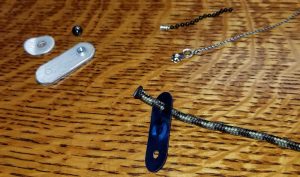 Step 4: Using a hand lighter, singe the end of the nylon cord and extinguish it by pushing it straight down into a couple drops of water on a flat, non-combustible surface. This should leave a hard, flat collar on one end of the cord. You can test to see if the end will hold by pulling on the cord to get the blade to make the click sound.
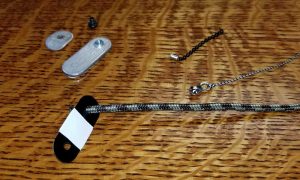 Step 5: To silence your clicker blade you can apply heavy duty outdoor tape to the center of the blade. The more layers you apply, the quieter it will get. It is up to you how much this will be.
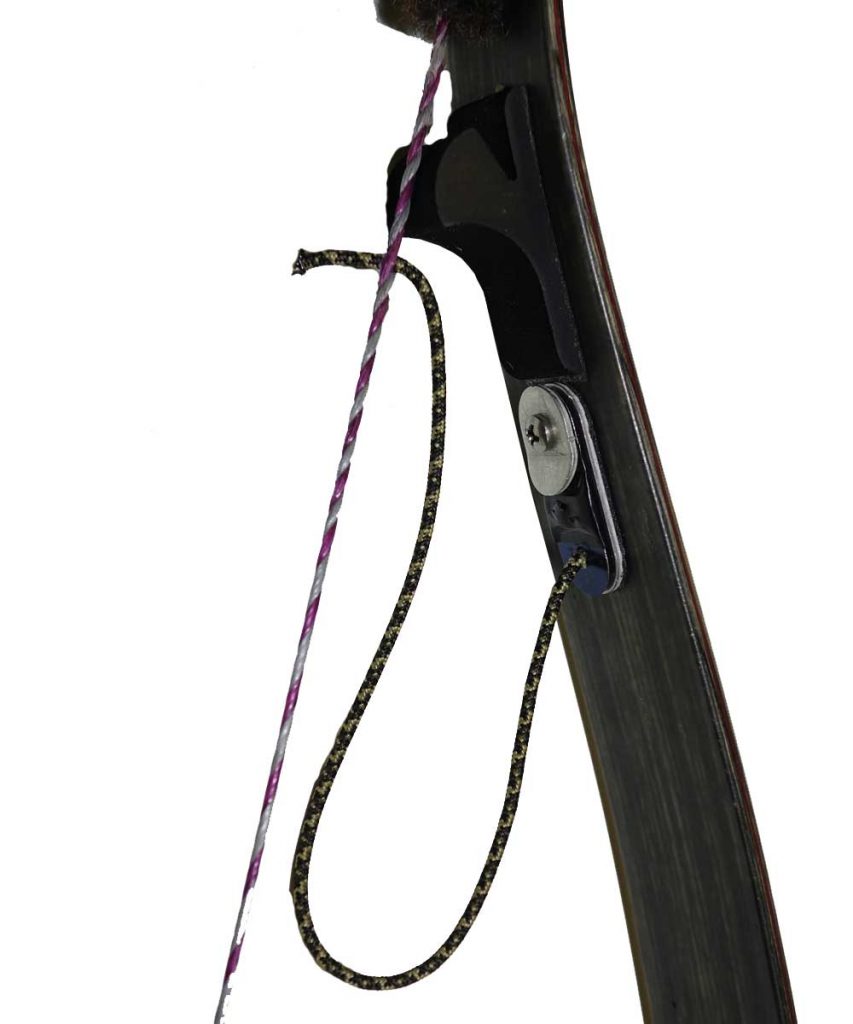 Step 8: Remove the sticky backing from the clicker and press onto the center of the top bow limb with the string positioned down.
 Get the Newsletter