Welcome to the Archer's Den. Here you will find a gathering of traditional archery stories, tips and techniques, trophy animals taken with traditional bows, and plenty more. Stay a while and learn something. We hope you enjoy and even submit a trophy of your own, or leave a comment on a post.
All posts by 3Rivers Archery
Your longbow and recurve experts. Serving the archery community as the World's largest supplier of traditional and primitive archery supplies.
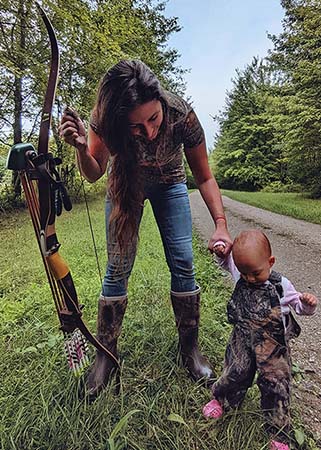
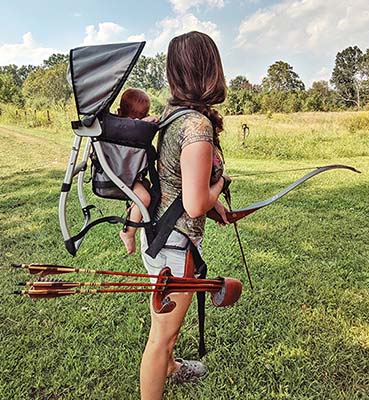
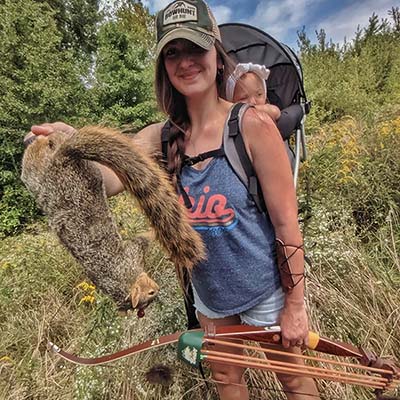
There was never a point in my life where I thought, “When I have a baby I’m going to take them hunting with me before they can even walk.” But that’s sort of what happened.
When I got pregnant I assumed I would be able to leave
Isabella with my husband while I hunted. As it turned out, my husband’s
schedule wasn’t ideal and I had two choices. I could either:
1) stay in the house with Isabella and not hunt,
Or
2) take Isabella with me.
I was extremely nervous the first few hunts…you really
have to pack and prepare carefully with a little one. But, our hunts went far
better than I expected. My daughter just turned a year old and is my favorite
hunting buddy.
I get a lot of questions on social media on taking a baby/kid outdoors. I’m going to share my best tips here. All of this can apply to taking your child hunting, fishing, or simply hiking in the outdoors.
1. Plan ahead. This is definitely BIG. Does your kid wake up early? Nap several times a day? Hunt around their schedules. Morning hunts worked far better for me than evening hunts as my daughter liked to be in bed by a certain time and would get fussy in the evening.
2. Clothing. Make sure your kid is comfortable. If it’s cold, invest in quality cold weather gear and pay attention to hands, feet and face as they will get cold first. Pack an extra blanket and layers and make use of hot hands. If it’s hot out make sure they’re in lightweight cool clothing and stay hydrated. Babies in particular can’t regulate their body temperature as well as we can so I chose to hunt mild temperatures and nothing extreme.
3. Bug spray/Sunscreen. Yes, so far everything seems like common sense I know! Keep in mind that a lot of bug spray and sunscreen isn’t safe for young children and babies and you’ll want to use something natural without harmful chemicals. I used Bug Off spray with good results, and there are several great brands of baby sunscreen if you’re going to be in the sun. Hearing protection is also another option to have if you are planning on loudly calling (elk, turkey etc) and don’t want to wake up your child if they’re napping.
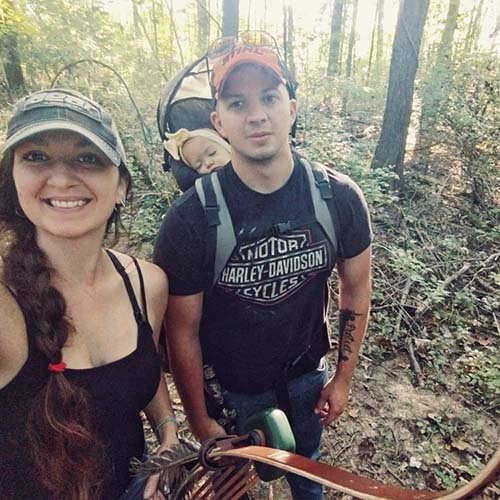
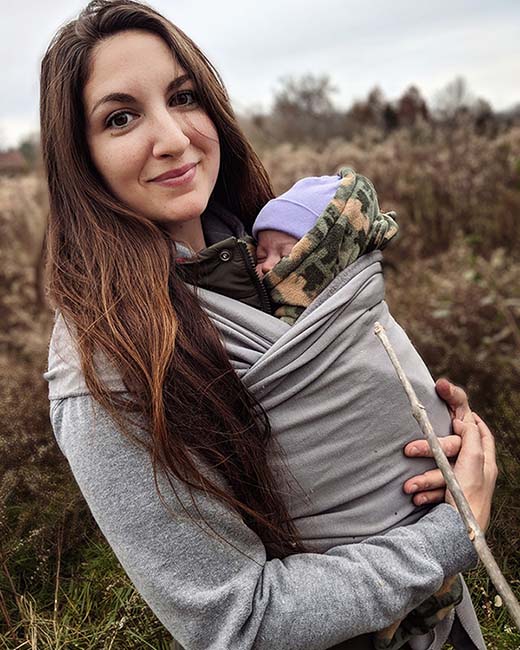
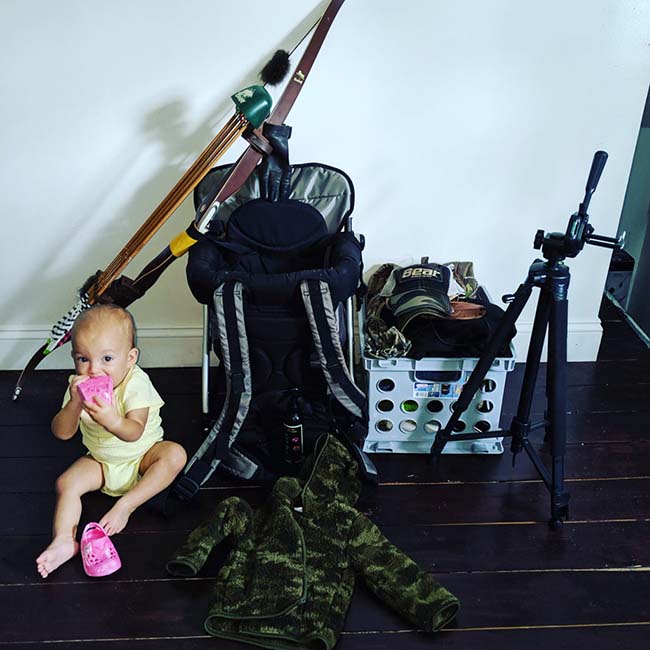
4. Pack/Carrier. Isabella was only a few months old when I started taking her on hikes. Since 99% of the places I go aren’t exactly stroller friendly, I opted for baby carriers. If you plan on shooting/hunting you’ll want to get one. For smaller babies you’ll want a soft carrier such as a wrap, sling, or front carrier that supports their head and neck. From roughly 6 months to several years old, a backpack carrier works best. You can shoot with ease while carrying them, which is great. Many of them are pricey but you can find great used backpack carriers online for sale at a fraction of the price. You will want to practice shooting while wearing it, as it does cause you to distribute your weight differently
6. Snacks/water. This is a big one. For children under a year it can be a little tricky as babies tend to eat A LOT and mostly on demand. You’ll need to bring bottles if appropriate. For older babies and children, bring a variety of quiet snacks and water. I liked to use snacks strategically to keep Isabella quiet when I knew a turkey was close.
7. Diapers and wipes. Self explanatory. You’re going to need them.
8. Toys/Electronics. I brought along some soft (quiet) toys for Isabella to keep her distracted when she got fussy. For older kids you can bring an iPad with games and headphones as a last resort if they get antsy.
9. Blind/No blind. I’ve hunted out of a ground blind as well as spot and stalk hunting with Isabella on my back. Both seemed to work well, just do what is best for you. There is really no wrong answer. There is really no exact science to taking a kid along on your adventures. Stay flexible and remember you want them to enjoy the experience as well. You’re never too young to get out and enjoy the woods.
At the time of writing this, deer season is just days away here in Ohio, and I’ve been running down a mental checklist in my head of all the things I need to do and have ready for opening day.
I’ve always been a very prepared person, so these things are
just something I do every year, and I think it’s something every hunter should
do.
1. Practice. This is something that should be a given, but you’d be surprised how many people will pick up their bow for the first time in months, on opening day, and expect to be shooting perfectly. Even if it’s just a few arrows a day, practice is something every hunter should be doing. As a traditional hunter, it should be something that you do year round.
2. Bow Maintenance. This is something that needs to be given a once over every year, but that doesn’t necessarily mean you’ll have to change anything. Check your bow string and make sure it doesn’t need to be replaced (once a year is roughly the life of a string depending on how often you shoot). Check your hunting arrows for any any cracks and make sure they don’t need to be refletched. If you are shooting feathers in particular, this can be the case.
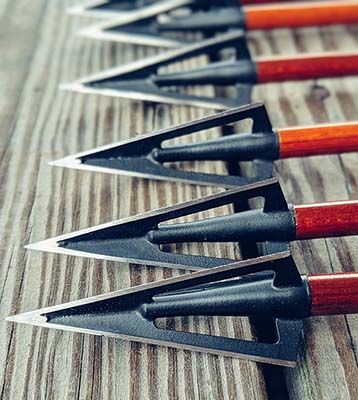
If you’re reusing your broadheads, make sure they are sharp.
It’s easy enough to sharpen fixed blades and a dull broadhead isn’t doing you
any favors.
Knowing your bow and accessories are in working order will
ensure you can rely on it performing well when it comes down to it.
3. Organizing your pack. I like to leave the basics in my pack every year (binoculars, arm guard, extra shooting glove, knife, waterproof box) and add whatever I’ll need for hunting that particular game when the time comes. For deer I’ll add a grunt tube, face mask, snacks, water and usually an extra layer of clothing. I like organizing everything so I know exactly what I have and where it is when I need it.
4. Scouting and Stand Prep. Most hunters have their spots picked out far in advance, and many sit the same spot every year with success. If you are going to use a treestand, make sure you don’t need to replace any cables or straps. If you’re hunting from a blind and setting it up in advance, make sure you have your chair setup and all crunchy grass and leaves removed from the floor in the blind. Also, do a wasp nest check before opening day. Trust me on this one…you don’t want to be sharing your blind with a dozen wasps when the sun comes up.
Check shooting lanes and then check again. Trim anything
that could even remotely prevent you from getting your shot.
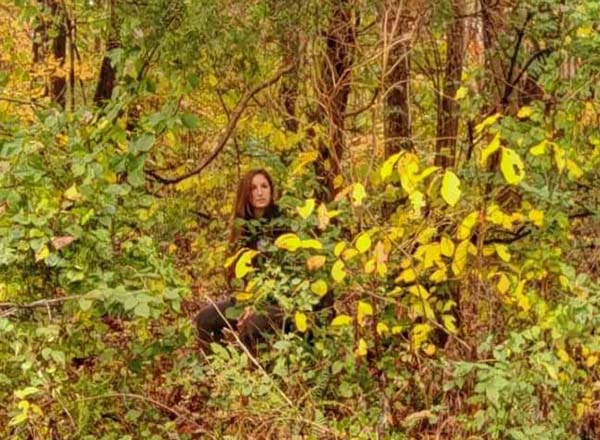
5. Wash your camo. It seems this varies from hunter to hunter… Some hunters like to wash their clothes in scent free detergent and store them in tubs. Others like to air them outside and spray down with scent killer. Whatever you do, make sure it’s done before opening day!
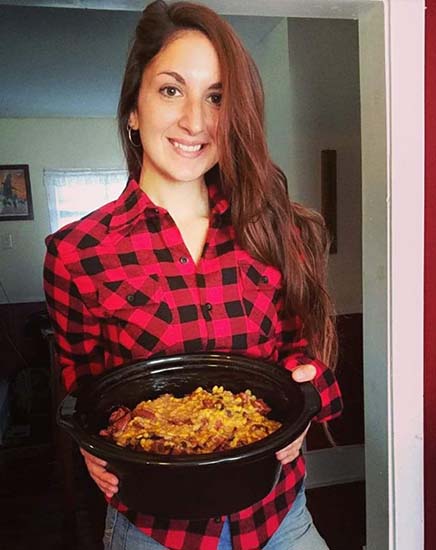
6. House and Food prep. This one may sound a bit out of the ordinary on this list, but in truth it is extremely helpful. Especially if you’re planning on being away from home for long periods of time, it’s nice to have things prepped. No one likes to clean their house, but organizing and cleaning your house before hunting season just means you won’t have to worry about it during hunting season. Planning easy meals and making them ahead of time to stick in the freezer has been a game changer…meal prep and throw something in the crock pot before you leave in the morning. When you come home at night you’ll have a hot meal without having to actually cook.
No, this is not a recipe on how I like to cook turkeys. It is about my favorite way to hunt turkeys.
I’m not really sure if I love to hunt turkeys or if they are just the only thing that is really huntable in the spring besides pigs, bears or fish. Either way, it is definitely up there on my many favorites to hunt.
Notice I said to hunt and not to guide. I also guide turkey hunters and a good portion of my clients are traditional shooters. I think the reason I like hunting over guiding is because sometimes it is tough to watch a fellow traditional guy hunt turkeys. I have learned how to hunt Turkeys by making virtually every mistake possible so I try to save my clients the pain of making all the mistakes I have made. Inevitably however, every year I cringe a little as I see history repeat itself as some of them make the same mistakes I have made.
The first tough thing about turkey hunting with traditional equipment is getting into bow range. One thing I learned by hunting turkeys without a blind is that less is best. By that I mean try and make yourself and your equipment not only camouflaged but streamlined. For example, when I am hunting turkeys and I am just sitting and calling, I take my quiver off my bow. In my mind those extra arrows and fletching are just that much more for a sharp-eyed turkey to see when you lift your bow for a shot. I am also a firm believer in full camouflage. A watch, ring, even shiny framed glasses can give away your position if you are not careful. I have seen some great looking recurves and longbows with shiny finishes on them. Those may look great on a display rack but they stick out like the proverbial sore thumb in the woods. To avoid getting busted, I like a matt finish or a camouflage finish on my bow.
I grew up hunting turkeys way before any of the “pop-up” blinds were used or even thought of. To me a turkey blind was when you cut a few branches and used them to hide behind. I think because I started out hunting turkeys the old school way it has made me a better hunter. If you can draw on a sharp-eyed turkey, then you can draw on anything.
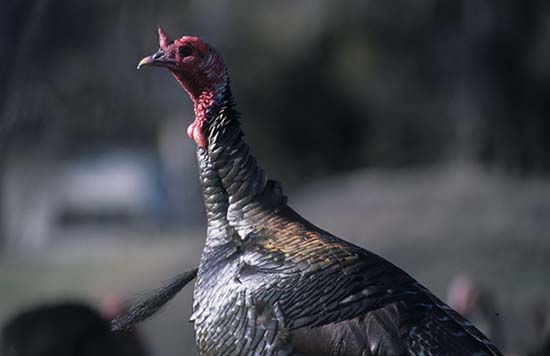
Turkeys have excellent vision. They can detect motion many yards away.
Turkey decoys were and still are a very important part of luring a bird in close enough for a good shot with a traditional bow. It gives the bird or birds something to look at and makes it easier to get away with drawing your bow.
Although I enjoy hunting turkeys without a blind, the fact is, in states where they are legal, a blind is the most effective way for a bowhunter to lure a bird in range without being busted. For guiding they are awesome. I also like turkey hunting with a pop-up blind because the shots are generally closer and I can bring my kids with me and they won’t spook every bird in a hundred yard radius. Having said that there are still a lot of mistakes that can be made while hunting out of a blind.
Blinds and decoys are useful for luring wary turkeys in range.
First, make sure you purchase a blind tall enough to accommodate your traditional bow. A lot of pop up blinds are designed for compounds or rifle hunters and just will not work for a traditional bow. Also, while hunting out of a blind the most common mistake I see is hunters getting silhouetted between open windows or screens. For a blind to work you must only have one side open and only open enough for you to see and shoot out of. I also prefer to go with black clothing because it blends in with the dark background of the blind. Additionally, I like to add some black camo paint or a glove on my bow hand that will be closest to the window or opening of the blind. Lastly when hunting out of a blind, I try and take care to not face the blind opening east or west. If you are facing the sunrise or sunset then light will come into the blind making you easier to spot.
I usually hunt out of an Ameristep blind with a shoot through netting. The netting helps hide you from sharp-eyed turkeys and really has no affect on arrow flight providing you have an arrow that is properly matched to your bow. To test it, try setting up a target and taking a few test shots to increase your confidence in shooting through the screen.
Besides getting a turkey in range, the toughest things about killing a turkey is knowing where to shoot them. About half of a turkeys size in full strut is actually bird. The other half is all feathers.
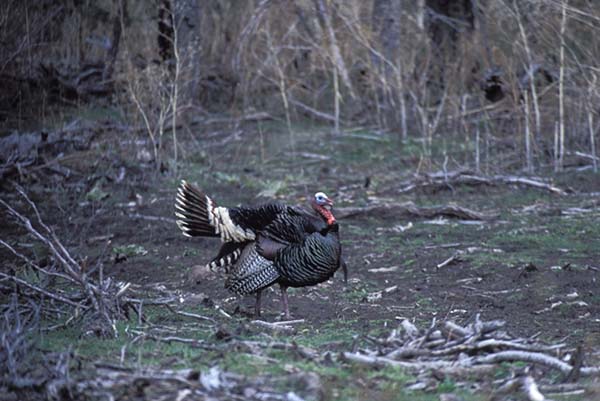
Turkeys strut as part of their courtship ritual.
When I am hunting without a blind, I prefer to shoot a bird in full strut that is facing away from me. In this position the birds eyes are hidden from view by it’s fan. I try and shoot right in the “keester” at that angle. When in a blind, I prefer a broadside shot. When the bird is broadside I try and shoot two inches behind the wing butt. This shot will take out the lungs and put the bird down fast. Some hunters aim for the head which can be instantly fatal but I am not that good and the head is rarely still. In fact the head is usually the first thing that moves so I like the larger kill zone of the chest.
For traditional hunters, these birds can be a tough target. I try and set my decoys close in and usually only ten yards away, that way even if they hang up a little, I can usually get a twenty yard shot. If they come right in my shot is usually five to ten yards.
If you haven’t already tried turkey hunting with a traditional bow, Don’t try it. It is addictive, frustrating and rewarding. A dangerous combination that is habit forming.
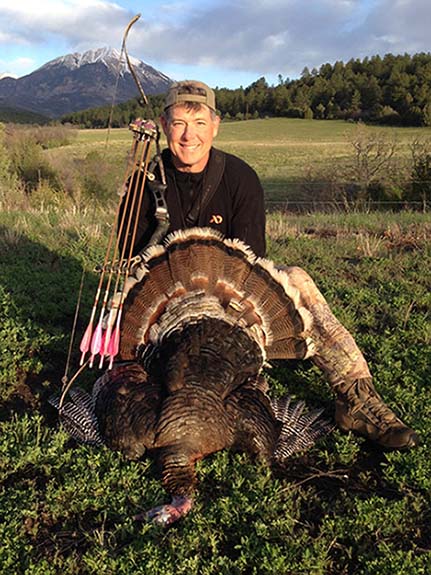
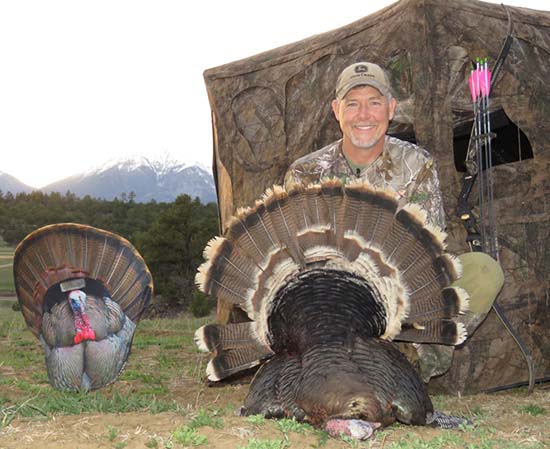
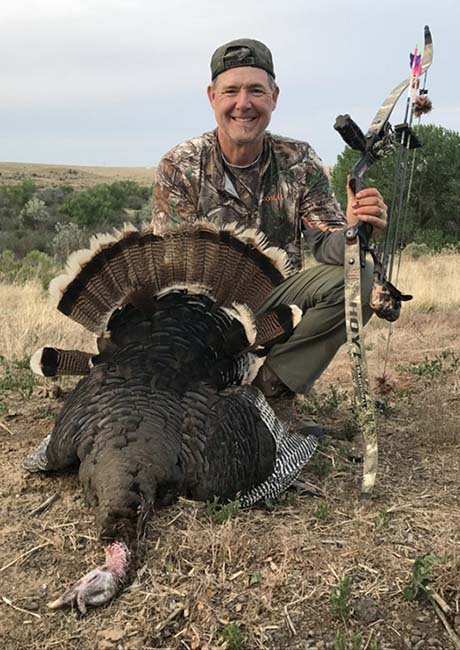
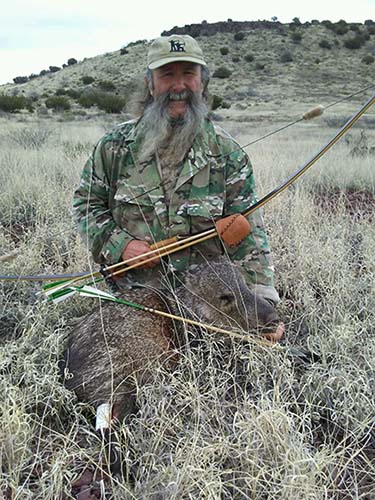
Fred poses with the results of a successful wild turkey hunt.
If you frequently hunt public land, I am sure that you have had your share of mishaps and run-ins with other hunters. You’d like to think that as hunters, we are all on the same page and therefore will be respectful of others and the area we are hunting… but this is not always true. Whether you are hunting deer, turkey, small game or something else, there are Five Rules that every hunter should follow. I like to think they are common sense, but it seems they are not for some.
1. First Come, First Serve. You pull into a small lot at 5:00 in the morning, and see that there is already someone parked there. You walk in to the woods and arrive at your favorite tree, only to discover someone else is hunting in it. Sure, it’s easy to get angry or frustrated but lets be honest…it’s public land and they have as much right to be there as you do. If they got there first, simply be respectful and back off. Find another spot to hunt, or move a safe distance away so you won’t be disturbing them while they are hunting. On multiple occasions I have arrived at a little pull off area to find someone else already there, and I have simply kept driving. It’s tough to do if you’re hunting a specific animal but I consider it common courtesy.
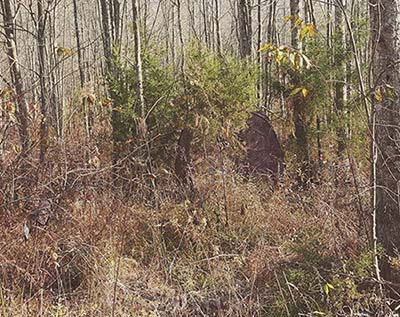
2.Know Your Target
And Beyond. This
one should be common sense, but every year you read about someone getting shot
by a fellow hunter because they never actually identified their target before
pulling the trigger. If you see something moving in the brush and you think
it’s an animal, don’t just blindly shoot. If you hear a gobble coming from
behind that tree, make sure it is in fact a turkey and not a fellow hunter.
3. Personal Space. This is one of the biggest issues I have run into while hunting public land. Although it wasn’t a huge issue during deer season, I had a lot of struggles during this past turkey season. If you know someone else is hunting in the area, or if you accidentally stumble into each other, make sure you move a safe distance away and let them continue on their hunt. Don’t make loud noises or angrily confront them, and don’t decide to park close enough that they can’t get into their vehicle on the way out (someone actually did this to me.) And lastly, don’t take advantage of their location if they are calling/sitting over bait/ etc and set up to cut off anything that comes their way. Keep in mind, the road less traveled is always best. Going the extra mile and taking the time to go deeper into the woods will also eliminate the chances of running into anyone else.
4. Don’t Steal. Although I have never been a fan of leaving stands, blinds, or cameras in the woods on public land… I know many people who do. It can be tough to constantly pack in and out, especially if you don’t live close to the area or if you only hunt on weekends. If you find someone else’s hunting gear in the woods, just leave it alone. Chances are, they’ll be back for it.
5. Be Courteous. Just because someone is hunting the same area that you are, doesn’t mean they are intentionally invading “your spot” or that they even knew that you were there. If you meet another hunter in the woods, whether you got there first or they did, be polite and courteous instead of confrontational. Most hunters are great people and they are out there for the same reason you are… and they certainly don’t want to run across other hunters any more than you do.







.jpg "Welcome to the 3Rivers Archer's Den")
 Get the Newsletter